
Understanding diabetes-related nerve problems
Diabetic neuropathy is nerve damage associated with diabetes. Different nerves can affect sensation, movement or other body functions.
Causes and risk factors
Long-term glucose exposure and other health factors can contribute. Other causes of nerve symptoms may also need investigation.

Symptoms and changes to notice
Tingling, burning or numbness can occur, particularly in the feet. Reduced pain sensation does not mean an injury is harmless.
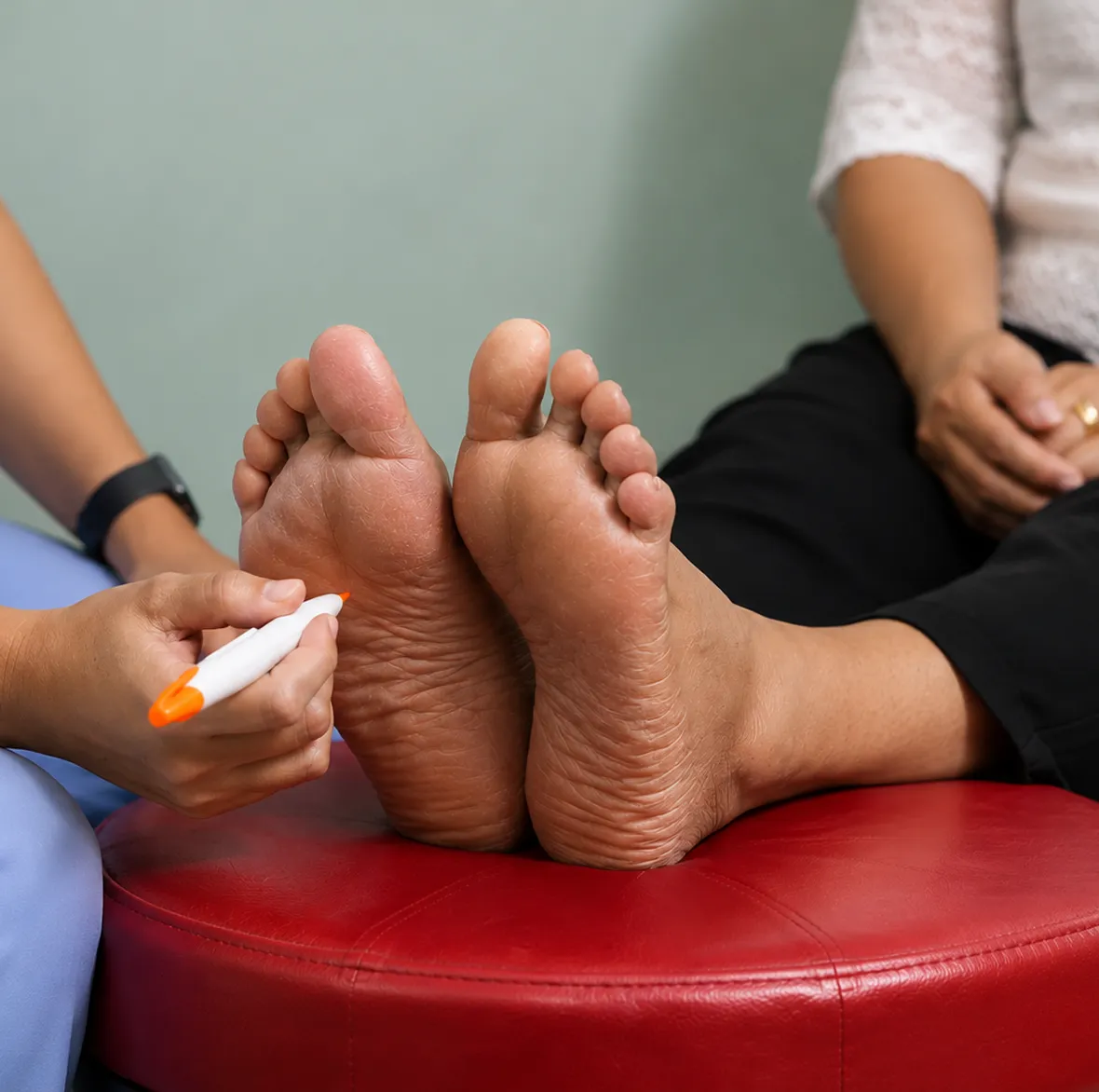
How clinicians assess it
The clinician reviews the pattern and examines sensation and feet. A new wound, infection or major weakness needs prompt medical assessment.
Understand tests and monitoring →
Recognise when the next step needs urgent care
A foot ulcer, spreading redness, discharge, fever or a suddenly cold or discoloured foot needs urgent assessment. Do not massage or apply unprescribed remedies to an injured foot.
Continue the follow-up and prescribed treatment agreed with your treating clinician. A routine enquiry or a photograph cannot assess the seriousness of a new symptom.
Understand what the picture shows
A representative food photograph. Meal planning needs to fit your current treatment and health needs; the pictured foods are not a prescribed diet.
Questions for Dr. Shital
- Which foot-care advice, examination reports and prescriptions should I bring?
- What changes should prompt assessment by my treating clinician?
Original clinic photograph. A photograph does not establish a diagnosis, a treatment result or completed medical review of this page.
Ask the clinic about your consultationGeneral educational information · Sources checked 22 October 2026 · Named clinician review pending. Tests described here are selected according to need; this does not confirm on-site availability.
How can neuropathy affect the feet?
Diabetes-related nerve damage can cause pain, altered sensation or reduced awareness of injury. A painless foot is not necessarily a healthy foot. Similar symptoms can have other causes, so diagnosis should not be assumed from diabetes alone.
What practical precautions matter?
Inspect your feet regularly and use suitable footwear. Avoid hot water bottles or hot applications on numb skin. Ask a clinician about a foot examination and safe nail and skin care. Report a new wound, redness or swelling promptly.
What can a Pimpri consultation address?
Bring glucose records, medicines and previous nerve or foot assessments. Dr. Shital can discuss sustainable food and activity habits within your limitations. A wound, circulation problem or progressive weakness may require specialist care before any local therapy. We do not promise nerve regeneration.
When should I seek urgent care?
A foot ulcer, spreading redness, discharge, fever or a suddenly cold or discoloured foot needs urgent assessment. Do not massage or apply unprescribed remedies to an injured foot.
Nerve symptoms need a specific assessment
Diabetic neuropathy means nerve damage associated with diabetes. Different nerves can produce different problems; symptoms are not limited to pain.
Describe the pattern
Explain whether you have numbness, burning, altered sensation or another concern, where it occurs and how it affects walking, sleep or daily activities. The clinician decides what needs examination.
Keep the wider diabetes plan connected
Bring your current diabetes treatment and relevant reports. Ask about appropriate foot care, monitoring and referral rather than assuming all symptoms need the same therapy.
Sources for this explanation
Sources checked 21 October 2026. Prepared by the clinic information team; named clinical review is pending. Sources explain general medical information and do not demonstrate a Pimpri treatment outcome.
What information helps with diabetic neuropathy?
Bring what you already have. These discussion points are not a prescription for tests or a statement that every investigation is performed at the clinic.
Glucose history
Bring dated glucose and HbA1c results, with a note of recent medicine changes or illness.
Medicines and low readings
Explain your current treatment and any episodes of low glucose or missed meals.
Complication follow-up
Bring existing eye, kidney, nerve, foot or cardiac reports relevant to the concern.
Daily routine
Discuss meals, work, sleep, activity and practical barriers before agreeing on a plan.
A plan that fits your diagnosis and daily life.
Discuss the role and limits of supportive care alongside your existing treatment.
Food and everyday routines
Ask for a meal plan that fits your medicines and other health needs. Clarify how to manage missed meals, illness or fasting; do not copy an intensive programme diet yourself.
Diet and nutrition information →Ayurveda and Panchakarma suitability
Discuss the proposed CDC components, any suitable Panchakarma, herbal products and monitoring with the clinician. A programme label is not a prediction of your result.
Ask which procedure is proposed, what preparation involves, what it costs and when it should be delayed or avoided.
Understand Panchakarma →Follow-up and coordination
Agree what readings to record, how to seek advice about low glucose and which complication screening or specialist reviews should continue.
Understand the care approach →Leave the consultation with clear next steps.
- What is being assessed, and what remains uncertain?
- Which part of the proposed plan is intended to support my particular concern?
- What preparation, fees, precautions and follow-up apply?
- Who should I contact if symptoms change or the plan causes discomfort?
From your first question to a clear follow-up plan.
A routine consultation about diabetic neuropathy starts with your history. The clinician decides what is appropriate; this is not a fixed treatment protocol.

Meet your doctor →
Bring your health context
Prepare the reports and prescriptions you already have, together with your questions.
Discuss assessment and suitability
Explain your current treatment and any recent changes. Ask whether specialist review is needed.
Understand the proposed plan
Discuss suitable care, food and routines, preparation, limitations and fees before agreeing.
Confirm your follow-up
Clarify what to monitor, who reviews progress and when to seek medical advice.
How do I prepare for a Pimpri consultation?
Bring current prescriptions, relevant reports and your questions. Tell Dr. Shital about recent hospital treatment, allergies, herbs and supplements. Confirm suitability and the scope of supportive care before starting a programme. Tests mentioned in educational guidance are not automatically available at this clinic.
Continue prescribed treatment unless your treating clinician changes it. This clinic does not replace emergency, cardiology, kidney or eye-specialist services.
Meet Dr. Shital More-MhaisaneFrequently asked questions
How can Madhavbaug Pimpri support my care?
Care can focus on glucose management, nutrition, suitable activity and foot-safety routines alongside assessment of nerve symptoms. The doctor reviews medicines and relevant reports and discusses specialist input when needed.
Does numbness mean there is no injury?
No. Reduced sensation can hide an injury. Examine your feet and seek assessment for any new wound or unexplained change.
Can all tingling be attributed to diabetes?
No. A clinician may consider other causes, including nutritional or thyroid-related problems, before deciding on care.
Sources and further reading
These sources explain general medical care; they do not establish outcomes for Ayurvedic treatment or for this clinic.