
What is Shirodhara?
Shirodhara involves a controlled stream of a clinician-selected liquid over the forehead. The clinician decides whether it belongs in your individual plan, and explains the proposed purpose, alternatives and uncertainties.
Shirodhara is available at Madhavbaug Pimpri after an Ayurvedic assessment. Discuss suitability, practical preparation and realistic expectations with the clinician.
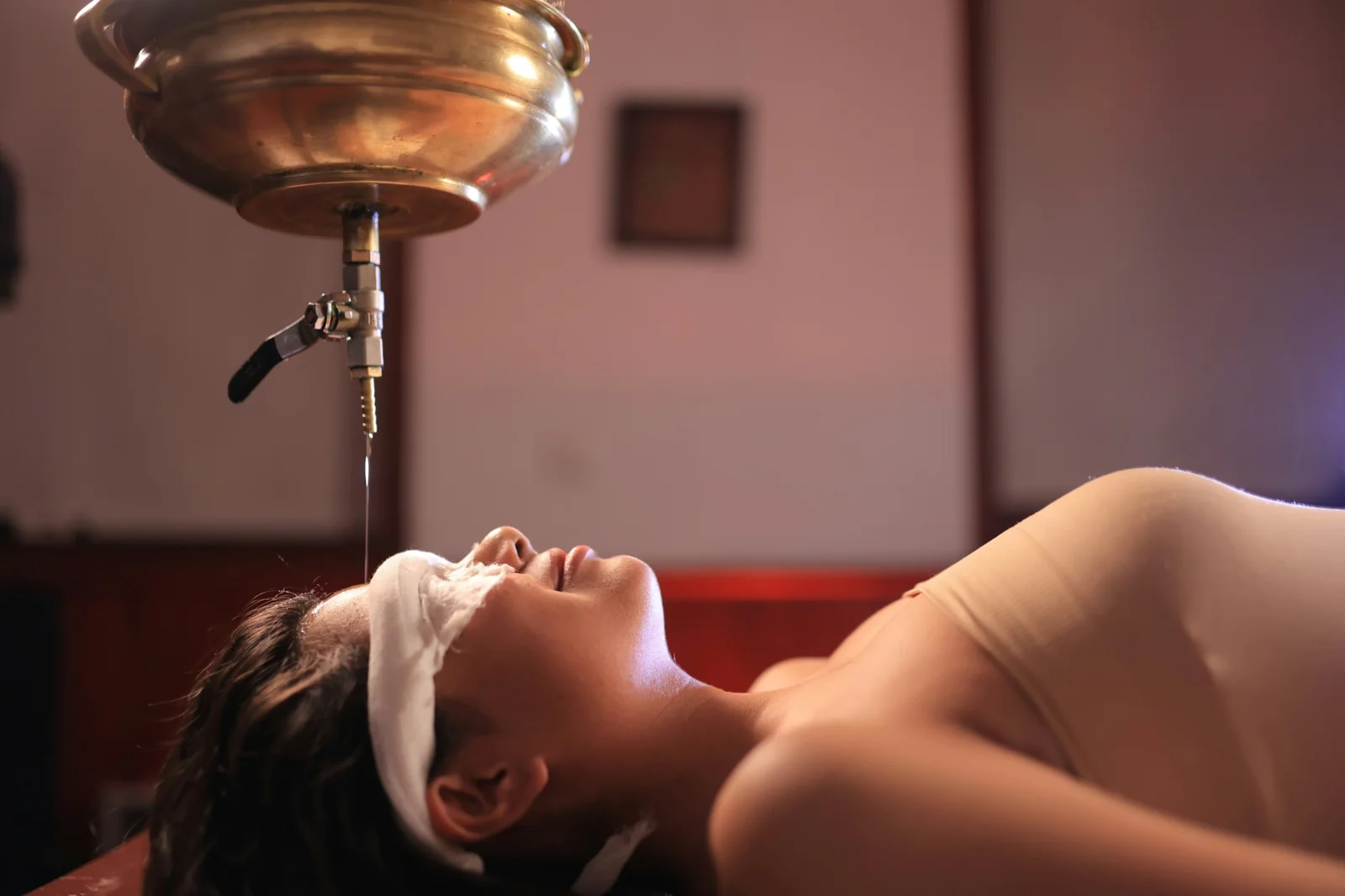
For adults asking about Ayurvedic supportive care for stress, relaxation or sleep-related concerns.
Your visit at Madhavbaug Pimpri Morwadi starts with your history, current treatment and health priorities. Dr. Shital More-Mhaisane considers suitable Ayurvedic care, everyday lifestyle guidance and follow-up individually. Necessary specialist care and prescribed medicines remain part of a coordinated plan.
Plan a consultationSuitability assessment. Supervised session. After-care advice
For adults asking about Ayurvedic supportive care for stress, relaxation or sleep-related concerns.
Review the concerns covered above →Suitability is decided by the doctor. Confirm programme contents, clinical supervision, fees and any specialist input before starting care.
Dr. Shital More-Mhaisane · BAMS, MD Ayurveda
Morwadi, Pimpri-Chinchwad, Pune
Bring your readings, prescriptions and questions. Discuss a suitable next step.
Shirodhara involves a controlled stream of a clinician-selected liquid over the forehead. The clinician decides whether it belongs in your individual plan, and explains the proposed purpose, alternatives and uncertainties.
Shirodhara involves a controlled stream of a clinician-selected liquid over the forehead. The clinician decides whether it belongs in your individual plan, and explains the proposed purpose, alternatives and uncertainties.
No. It is not a substitute for prescribed blood pressure, thyroid, diabetes or psychiatric treatment. It is not promised to cure a disease or clear blocked arteries. Tell the team about allergies, pregnancy, dizziness, recent illness and all medicines.
Ask what substance will be used, who supervises the procedure, session duration, fees, hygiene arrangements and after-care. Report discomfort or unexpected symptoms immediately.
Discuss your usual food and any clinician-given restrictions before changing your diet.
Nutrition & everyday care →Discuss an activity and rest plan that fits your current health and treatment.
Use these points to discuss shirodhara with the clinic. Your clinician confirms the individual plan, preparation and follow-up.
Explain your symptoms, current treatment and any scalp or skin concern before booking a therapy session.
Ask about the product used, positioning, supervision and what to do if uncomfortable.
Follow the instructions given by the clinic; do not assume a standard fasting or medicine rule.
Confirm the advice for washing, travel, rest and review that applies to your session.
Your plan and review schedule are individual. These steps describe a care discussion, without promising a treatment timeline or result.
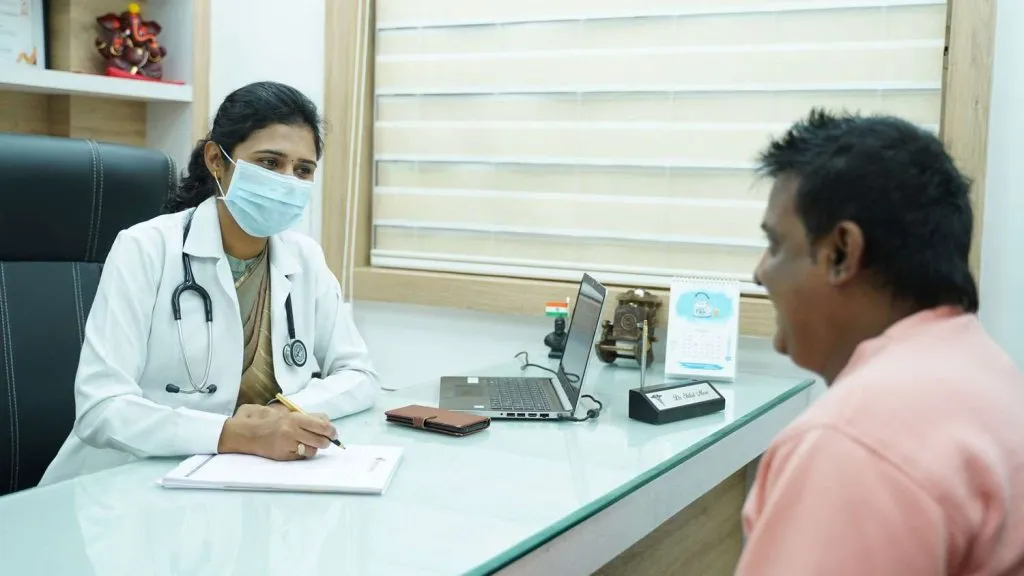
Bring your existing reports, prescriptions and questions.
Explain your symptoms, history and everyday routine.
Ask about preparation, limitations, fees and follow-up.
Confirm who reviews results and how to contact the clinic.
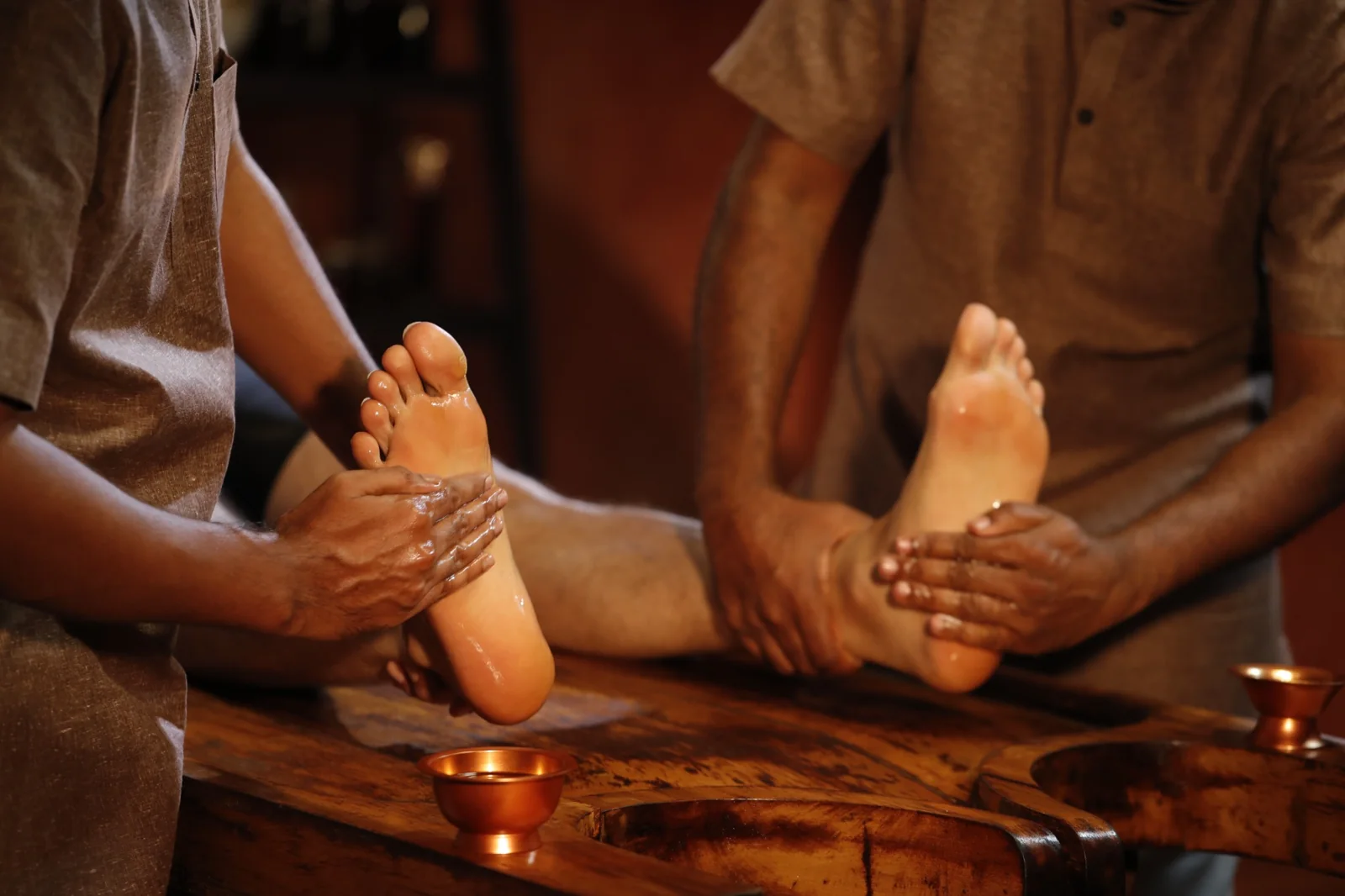
Ask about suitability, fees, preparation, expected follow-up and how progress will be assessed. Booking availability is confirmed through the clinic’s existing booking service.
View appointment availabilityInvestigations are chosen to answer a clinical question. This list is not a prescription for tests or a claim that every investigation is performed on-site.
Bring information already available; the clinician decides whether additional assessment is needed.
Bring information already available; the clinician decides whether additional assessment is needed.
Bring information already available; the clinician decides whether additional assessment is needed.
Your history, current treatment and health priorities guide the consultation.
Explore an individual conversationMeet Dr. Shital More-Mhaisane, BAMS, MD (Ayurveda), and understand her approach.
Explore a named clinicianDiscuss familiar foods, routines and activity that fit your medical needs.
Explore practical everyday supportAgree on relevant readings and follow-up rather than assuming every test is required.
Explore monitoring with a purposeAsk about suitability, precautions and when specialist input should continue.
Explore know the scope of careCheck the location, contact details and appointment arrangements before travelling.
Explore your clinic in morwadiDiscuss your health history, reports and daily routine with Dr. Shital More-Mhaisane. An individual assessment guides suitable options and follow-up.
Patient experiences offer perspective; they do not predict another person’s outcome.
Explore patient experiences
Use the source material below to prepare questions. General educational information does not establish a local outcome or guarantee suitability.
Programme terminology is researched from Madhavbaug network material. Network descriptions and published study findings are not Pimpri-specific outcomes or confirmation of local programme availability.
Research & context →New or severe chest pain, severe breathlessness, fainting, or stroke symptoms need urgent hospital care. Do not wait for a clinic appointment or WhatsApp reply.
Do not stop, reduce or replace prescribed medicines without the clinician responsible for them. Tell your care team about all Ayurvedic products and supplements. Supportive care does not replace urgent hospital care or necessary specialist treatment.
New or severe chest pain, severe breathlessness, fainting, or stroke symptoms need urgent hospital care. Do not wait for a clinic appointment or WhatsApp reply.
A selected liquid is applied in a controlled flow over the forehead under the planned procedure. At consultation, discuss the intended purpose, suitability, preparation and after-care. The substance and approach are selected individually; ask about evidence and precautions for your concern.
Suitability must be assessed individually. Share pregnancy status, allergies, skin concerns, medical conditions and all medicines before agreeing to a session.
No. It should not replace prescribed medicines or necessary specialist care. Ask about the evidence, limitations, possible adverse effects and alternatives.
See what selected procedures can look like, then discuss the right next step with your clinician. Photographs explain the setting; they do not establish treatment suitability or results.


Understand the procedure, suitability, preparation and after-care before a supervised session.
Explore & ask about care →Ask about oil application and massage as part of an individually selected Ayurvedic care plan.
Explore & ask about care →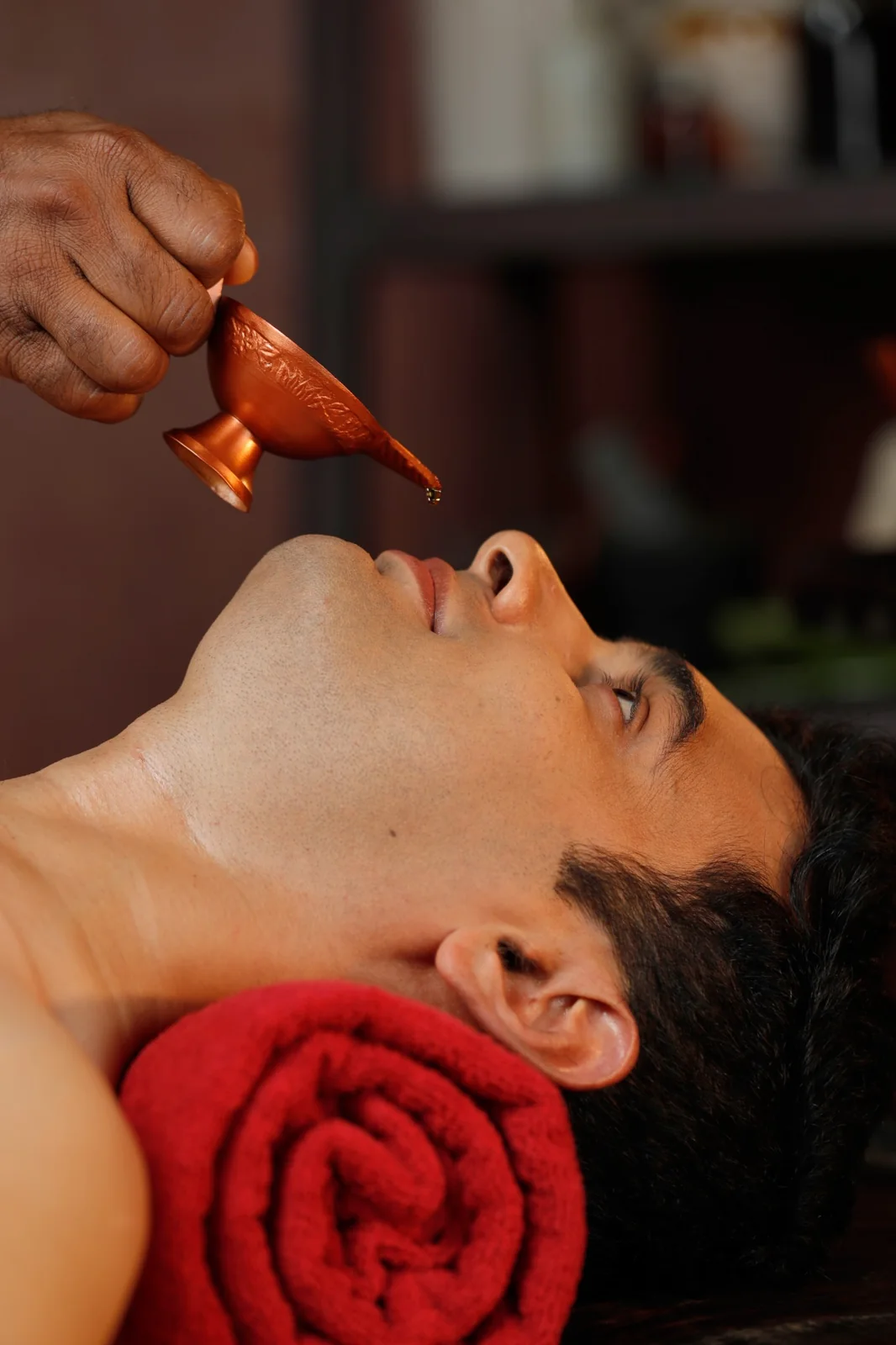
An educational view of an Ayurvedic procedure. Confirm whether it is available and suitable before booking.
Explore & ask about care →Therapy selection requires assessment. Continue prescribed medicines unless your treating clinician changes them.
Open the full photo gallery →Shirodhara is an Ayurvedic procedure involving a controlled stream of a selected liquid over the forehead region. It is often associated with relaxation-oriented care. The useful starting point is an individual discussion about your symptoms, the purpose of the proposed session and the role of other treatment, rather than an assumption that every person needs the same course.
The name combines terms referring to the head and a flowing stream. In practice, the selected preparation is directed in a controlled way while the person is supported in a resting position. Oils are commonly associated with the procedure, but traditional practice includes different named preparations. The material should be selected and explained by the clinician rather than inferred from a photograph.
Shirodhara differs from a head massage, oil retention on the scalp and other procedures that share the prefix Shiro. It also differs from a general spa service. A patient should understand what has actually been proposed, what is expected to contact the skin and what monitoring is part of the appointment. Familiar terminology is not a substitute for that explanation.
This guide describes a professional care discussion and broad experience. It is not a method for setting up a stream, preparing a liquid or selecting temperature and timing at home. Those details depend on clinical judgement, the material, the equipment and the individual receiving care.
Ayurvedic reasoning may consider the person’s routine, rest, symptoms and a pattern described through its own clinical concepts. A practitioner may explain Shirodhara as part of that assessment. Traditional terminology can be discussed meaningfully without presenting it as proof that the procedure resets the brain, repairs every hormonal disturbance or removes a particular modern disease.
The practical aim may be a calmer experience, relaxation or support within a broader plan. Those aims should be connected to what matters to you. A person who wants help understanding persistent sleeplessness needs a different conversation from someone simply enquiring about a relaxation-oriented therapy.
A positive explanation can be honest about boundaries. The clinician can describe why an option is being considered, which changes may be reasonable to observe and which outcomes remain uncertain. Individualized care does not mean promising a unique cure; it means making decisions that fit the person and revisiting them when necessary.
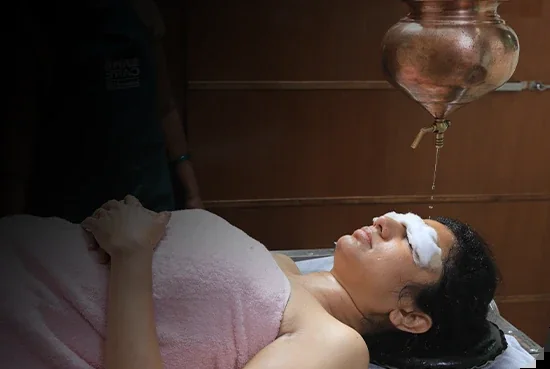
People may ask about Shirodhara when they feel tense, find it difficult to wind down or have concerns about sleep. They may also have seen it mentioned in an Ayurvedic plan for another condition. The reason for the enquiry should be explored rather than assumed. The same word stress can describe very different experiences and levels of difficulty.
Explain whether the concern affects work, relationships, concentration, sleep or daily function. Mention how long it has been present and what was happening when it began. If pain, medication, breathing problems during sleep or another illness contributes, that belongs in the assessment too. A relaxing procedure should not become a shortcut around understanding the actual problem.
A general educational page cannot decide who is eligible. Current availability, the proposed form, clinical supervision and fees should be confirmed directly with the clinic. An appointment to discuss a concern is an opportunity to understand options, not automatic confirmation that Shirodhara will be performed.
Sleep difficulty can involve taking a long time to fall asleep, repeated waking, waking too early or feeling unrefreshed. Describe the pattern in ordinary words and explain how it affects daytime life. The time available for sleep, work shifts, caregiving, pain and other health problems all provide important context. Looking only at the number of hours can miss the main difficulty.
Longstanding insomnia deserves appropriate assessment and treatment. Established approaches include cognitive behavioural therapy for insomnia, commonly called CBT-I. A relaxation-oriented procedure should not be presented as equivalent to that structured treatment or as a reason to discontinue care already helping. Different approaches can be discussed according to need, evidence and personal preference.
Loud snoring, witnessed pauses in breathing, sudden sleep attacks or severe daytime sleepiness may point to another sleep problem. Tell the clinician rather than assuming all poor sleep has the same cause. Do not drive when sleepiness makes it unsafe. A routine therapy appointment cannot replace assessment of a potentially important sleep disorder.
Feeling under pressure is common, but distress can range from a temporary difficult period to a mental health condition needing specific support. Describe worry, low mood, panic, loss of interest or changes in usual functioning honestly. These concerns should not be reduced to an imbalance label or treated as something you should simply tolerate.
A calm setting and a supportive conversation can be valued parts of care. They do not demonstrate that depression, an anxiety disorder or another mental health condition has been cured. If you already receive counselling or prescribed treatment, discuss how any complementary option fits with it. Do not stop psychiatric medicine abruptly because a procedure is described as natural.
If you feel at risk of harming yourself, cannot keep yourself safe or experience a severe mental health crisis, seek urgent professional help rather than waiting for a routine appointment. A relaxation session is not an emergency response. The clinical team should be clear about the scope of support it can provide and when specialist care is needed.
Bring a current list of medicines, supplements and Ayurvedic products. Include sleep medicines, medicines taken occasionally and products bought without prescription. Explain previous reactions or unusual experiences with treatment. A complete list helps the clinician consider the wider plan rather than focusing only on what will be applied to the forehead.
Tell the team about allergies, skin conditions, wounds, recent illness, fever, head injury, neurological conditions, pregnancy or an operation. Mention dizziness, difficulty lying flat, breathing discomfort and any condition affecting sensation or the ability to communicate during a procedure. These details may change suitability or the practical arrangement.
Previous Shirodhara experience can be useful to discuss, including whether it felt comfortable and whether any benefit lasted. However, a positive experience years ago does not automatically establish suitability now. Your health, symptoms and treatment may be different. A responsible assessment should consider the present situation.
Ask what liquid or preparation is proposed, what it contains and why it has been selected. If you have a known allergy, provide the relevant information before anything is applied. The explanation should be understandable without requiring you to know classical formulation names. Knowing the name alone does not establish the quality or suitability of a product.
Clarify the practical instructions given for your appointment, including clothing, hair care, food, medicines and travel. Do not copy fasting or dietary restrictions from a general video or another person’s plan. People with diabetes, pregnancy-related needs or other medical conditions may require particular advice. The responsible clinician should give instructions relevant to the actual procedure.
Understand the expected sequence, who will attend and how you can signal discomfort. If lying still makes you anxious, explain that before starting. You can ask for a demonstration of the arrangement or an explanation of what you will feel, without committing to proceed if it remains unsuitable.
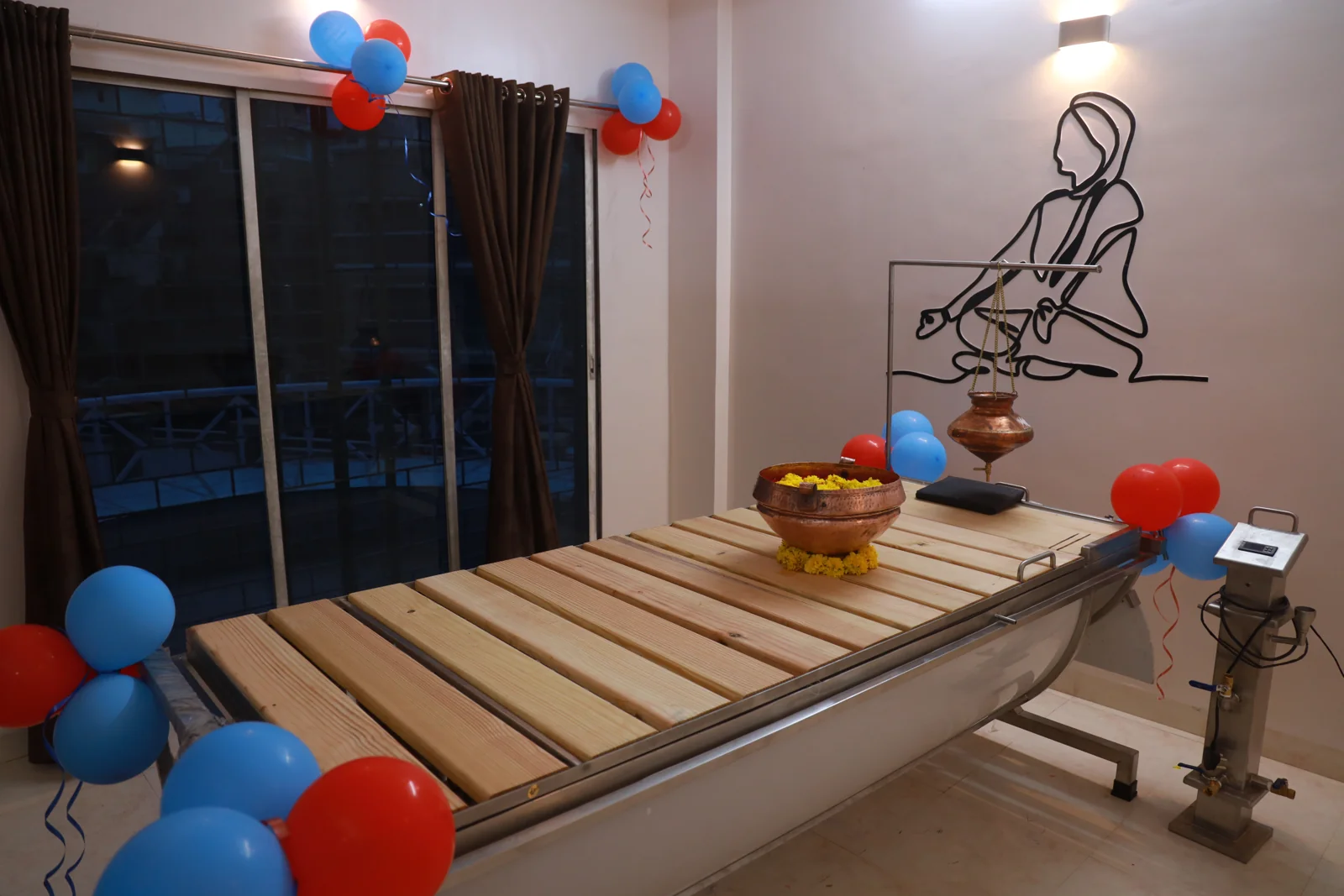
The person is supported in a resting position and the team manages the selected liquid and its delivery. Draping, eye and ear protection where appropriate, comfort and the ability to communicate should be addressed. The details can differ by preparation and clinical arrangement, so a photograph should not be treated as a complete description of the procedure.
The sensation may be unfamiliar. Some people find a gentle repetitive stream calming, while others dislike the feeling, the smell or the position. Both responses are legitimate. There is no requirement to enjoy the sensation or to tolerate distress because the therapy is traditionally associated with relaxation.
Report burning, irritation, headache, nausea, dizziness, breathing difficulty or another unexpected change promptly. You should know how to request a pause or stop even when your eyes are covered. Professional care includes responding to the person’s experience rather than treating a planned session length as more important than comfort and safety.
Before treatment, discuss draping, the people present and any assistance you need. You can ask about practitioner roles, supervision and a chaperone where appropriate. A familiar therapy should still be explained respectfully. Consent is an ongoing conversation, not a one-time agreement that prevents you from changing your mind.
If you find it difficult to speak during a procedure, agree on a simple way to communicate beforehand. This is particularly useful when lying down, with eyes covered or when several staff members are present. The team should check that you remain comfortable and able to request a change.
Consent to receive care does not automatically include permission for a photograph, a video or marketing use. Those are separate decisions. Reference images help explain terminology; they should not be presented as proof of a particular patient’s result or as authentic Pimpri clinic photographs without appropriate evidence and permission.
If relaxation is the aim, ask what that means for you. You might value feeling less tense during the appointment, having a manageable winding-down routine afterwards or being more comfortable discussing a broader health plan. A worthwhile experience can be described without claiming that the procedure changed an underlying disease.
If sleep or another symptom is the main target, choose an outcome that can be reviewed outside the treatment room. For example, what has changed in your usual nights or daytime functioning, and how long did the change last? Consider medicines, routine, stressors and other care introduced at the same time.
A single good night cannot establish a lasting treatment effect. Equally, a person should not feel pressured to report improvement to demonstrate that they followed instructions correctly. A useful review welcomes an honest response, including no meaningful change or an unpleasant experience. That information helps decide what to do next.
Shirodhara is described in professional Ayurveda institutions and practice guidance, and researchers have explored relaxation, sleep and physiological measures. These are different types of evidence. A procedure being recognized or studied does not mean that every advertised clinical use has been established to the same standard.
A change in a short-term measurement is not automatically a lasting improvement in health. Small studies, combined treatment programmes and limited comparison groups can make it difficult to know what caused an observed change. The results should be related to the actual population, method and outcome studied, rather than generalized to all patients or all diagnoses.
Ask the clinician to distinguish traditional rationale, clinical experience and direct research. It is reasonable for uncertainty to remain. That uncertainty should influence the expectations, consent and review plan. No clinic-wide success rate or guaranteed personal result should be inferred from an unrelated study or a chain-level description.
A therapy appointment occupies a small part of the week. Food patterns, work schedules, activity, sleep opportunities and sources of strain may be more important to the wider concern. Describe the routine you actually live with, including constraints, rather than presenting an ideal day you cannot maintain.
If winding down is difficult, discuss a realistic routine and the barriers to it. Someone working shifts or caring for a relative may not be able to follow generic advice about a fixed evening schedule. Practical changes should be feasible and should not turn a health plan into another source of pressure.
Where appropriate, the clinician may discuss nutrition, movement, rest or referral to another professional. These are not interchangeable with the procedure itself. Ask which parts of the plan have a clear purpose and how they will be followed up. A sustainable plan can be simpler than a long list of restrictions.
Shirodhara should not be used as a reason to stop blood-pressure, thyroid, diabetes, cardiac, neurological or mental health treatment. A calm feeling after a session is not enough information to decide that a medicine is no longer needed. Changes belong with the clinician responsible for the condition and the medicine.
If readings improve during a wider programme, discuss the pattern and the relevant monitoring with the treating team. A single measurement, testimonial or website answer cannot establish a safe medication change. Keep follow-up appointments and necessary investigations unless the responsible clinician advises otherwise.
Tell all treating professionals about the complementary care you are considering. This does not mean every external procedure has a medicine interaction, but it helps avoid conflicting instructions and unrecognized changes in the broader plan. The same openness is important for any herbs or supplements taken alongside the sessions.
Obtain instructions that match the preparation and the care actually received. Ask about cleaning the hair or skin, usual activities, any product reaction to watch for and how to contact the team with a routine concern. Avoid adopting elaborate restrictions from social media simply because they are described as compulsory after every Ayurvedic procedure.
Stand and move with assistance if needed, particularly if you feel dizzy, weak or unsteady. Whether you can drive or travel independently depends on your actual condition and any treatment received. Do not drive while sleepy or otherwise unsafe. Discuss practical arrangements in advance if you know that support may be needed.
Report unexpected symptoms rather than assuming they are a beneficial cleansing reaction. Persistent irritation, worsening headache or a significant new symptom deserves appropriate advice. Severe symptoms require the relevant medical pathway; a routine contact number should not be treated as an emergency service.
There is no universal number of Shirodhara sessions that applies to everyone who feels stressed or sleeps poorly. Ask why a particular schedule is proposed, what it includes, how the response will be reviewed and what would lead to modification or stopping. A familiar package name does not answer those questions.
Confirm current availability and fees directly, including whether consultation and review are included. Consider the practical demands of travel, time, hair care and help at home. A course that creates disproportionate difficulty may need a different arrangement or an alternative approach. Those are legitimate considerations in shared decisions.
When reviewing progress, return to the original concern rather than simply counting completed sessions. What has improved, how much does it matter and what remains difficult? The outcome of a review may be to continue, adjust, stop or seek another assessment. Each can be a useful next step when the reasoning is clear.
A child, a pregnant person or someone with significant illness needs a specific assessment rather than instructions copied from an adult educational page. Institutional protocols can be written for particular age groups or settings. A paediatric document, for example, should not be generalized into an adult treatment promise or evidence that every child is eligible.
Explain communication needs, sensory sensitivities, anxiety about touch or difficulty remaining in one position. The procedure may need to be modified or may not be appropriate. A person should not be restrained or pressured simply to complete a relaxation-oriented session. Capacity, consent and an appropriate professional setting remain central.
Recent illness, an unexplained new symptom or a change in mental or neurological health may mean that another assessment should happen first. The clinician should explain why a session is delayed or not advised. Deferring an unsuitable procedure can be a responsible and positive care decision, not a rejection of the person’s concerns.
Continue necessary medical care and prescribed medicines unless the treating clinician changes them.
No. It involves a controlled stream of a selected preparation over the forehead region and differs from massage or oil retention. The team should explain the actual material and method. Do not assume every version uses the same liquid, setting or purpose.
It should not be promised as a universal cure. Persistent sleep difficulty needs assessment, and established insomnia care may include CBT-I or other treatment selected for the cause. Shirodhara may be discussed as a relaxation-oriented complementary option, with realistic expectations and a clear review plan.
No medication change should be made from a relaxed feeling, one improved reading or a website answer. Continue prescribed treatment unless the clinician responsible for it advises otherwise. Share the full care plan and attend necessary follow-up so decisions are based on appropriate assessment.
Not by itself. A person may find the setting relaxing, but that does not establish a lasting effect on a condition or explain what caused the experience. If sleep is the goal, review the usual sleep pattern and daytime function over an appropriate period rather than one session.
Explain reactions to oils, herbs, fragrances, topical products and other relevant materials. Ask what preparation is proposed and what it contains. Tell the clinician about a rash, wound or skin condition before application. Natural or traditional does not automatically mean suitable for every skin type.
Follow instructions specific to your appointment and health. Do not copy fasting rules from another person’s treatment or a video. Diabetes, pregnancy and other medical conditions can make generic restrictions inappropriate. Ask the responsible clinician about food and medicines before making changes.
Say so before or during the session. Ask for an explanation of the setup and agree how to request a pause. You do not have to tolerate distress because a therapy is described as relaxing. The plan may need adjustment, a different option or a decision not to proceed.
It should not replace necessary mental health treatment or justify abruptly stopping medicine. A calming experience and treatment of a diagnosed mental health condition are different goals. Discuss complementary options openly with the relevant professionals and seek urgent help for a crisis or immediate safety concern.
That depends on the assessed purpose and proposed plan. Ask for the reason, schedule, fees and review point. A course should have a clear goal and a way to judge usefulness. Repeating sessions indefinitely is not a substitute for reassessing persistent symptoms.
Use the existing clinic contact or appointment route to discuss your concern and current Shirodhara arrangements. Confirm suitability, preparation, the supervising clinician, fees and follow-up. Opening an online booking page is not the same as confirmation that a procedure is suitable or scheduled.
Sources checked 24 October 2026. Traditional descriptions explain terminology and practice; they do not by themselves establish effectiveness or local service availability. Clinical review of this educational draft is pending.
Professional procedure context and safety considerations; not the Pimpri protocol or proof of every advertised outcome.
Institutional naming of Shirodhara; not confirmation of local availability or effectiveness.
Established sleep-treatment context, including CBT-I; does not endorse Shirodhara as an insomnia cure.
General sleep symptoms, assessment and safety context.
General evidence and safety context for Ayurveda; not a specific Shirodhara efficacy claim.