
Understanding blood pressure and eye health
High blood pressure can affect the small vessels in the retina. An eye examination is needed to assess retinal changes.
Causes and risk factors
Sustained high pressure and coexisting diabetes can affect eye-care planning. Pressure control and eye-specialist follow-up have distinct roles.

Symptoms and changes to notice
Early changes may not be noticeable. Sudden loss of vision or major new visual symptoms require urgent medical assessment.
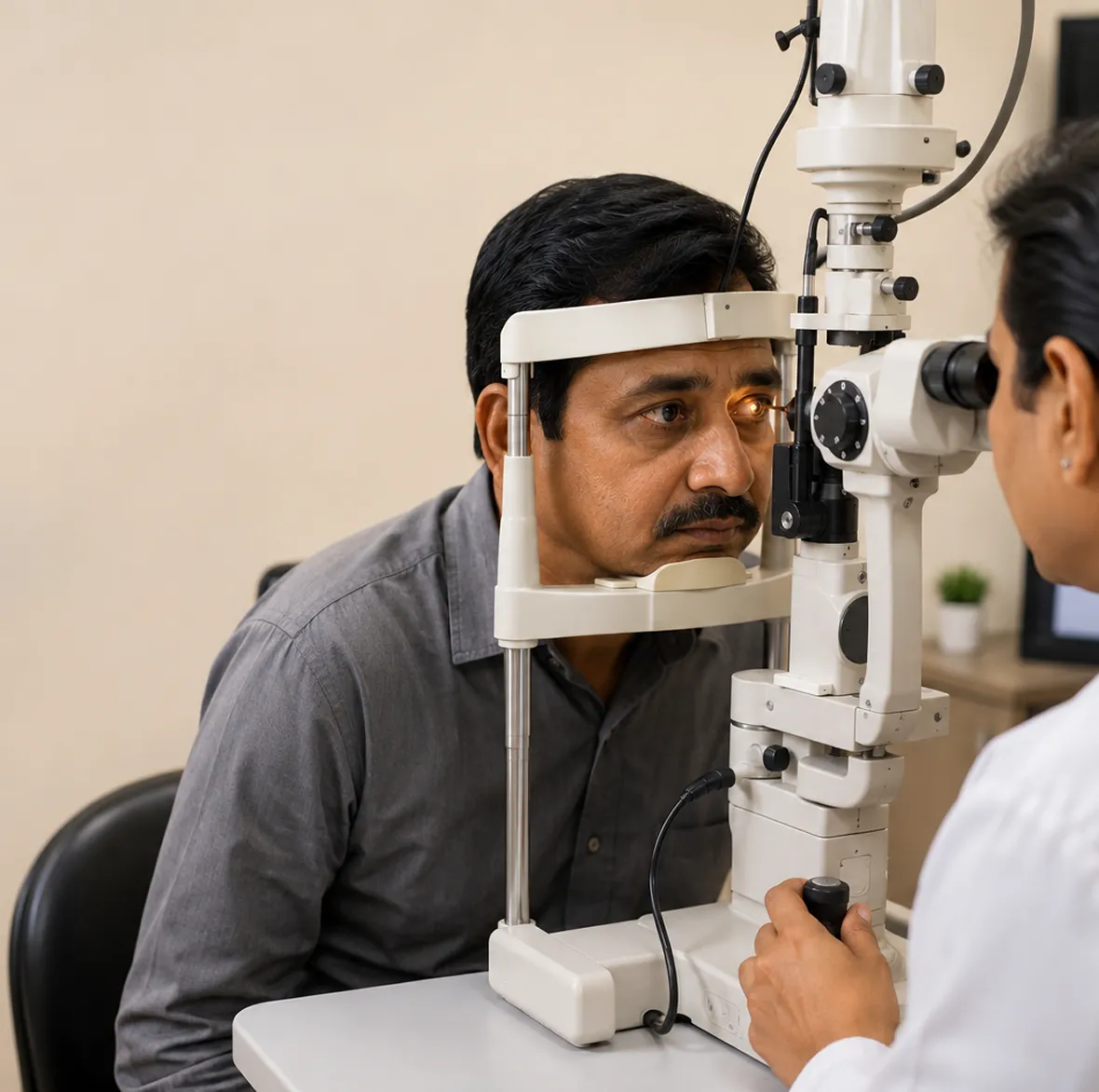
How clinicians assess it
An eye clinician examines the retina and determines follow-up or treatment. A routine clinic consultation does not replace this examination.
Understand tests and monitoring →
Recognise when the next step needs urgent care
Sudden vision loss or a major change in vision needs urgent medical assessment. Do not wait for a routine clinic visit.
Continue the follow-up and prescribed treatment agreed with your treating clinician. A routine enquiry or a photograph cannot assess the seriousness of a new symptom.
Understand what the picture shows
A representative arm-cuff blood-pressure measurement. A photograph or one reading cannot establish an individual diagnosis.
Questions for Dr. Shital
- Which eye reports and blood-pressure records should I bring?
- How should my eye and blood-pressure follow-up be coordinated?
Original clinic photograph. A photograph does not establish a diagnosis, a treatment result or completed medical review of this page.
Ask the clinic about your consultationGeneral educational information · Sources checked 22 October 2026 · Named clinician review pending. Tests described here are selected according to need; this does not confirm on-site availability.
Who evaluates retinal changes?
An eye specialist assesses the retina and explains the findings. Bring any eye report and your blood-pressure prescriptions to follow-up. A routine Ayurveda consultation does not replace an eye examination.
How should eye and blood-pressure care connect?
Ask your eye specialist and treating medical clinician how follow-up should be coordinated. Keep a current medicine list and bring the eye report when discussing daily routines or other health concerns.
What should I ask before additional treatment?
Clarify whether a proposed therapy has any role in your individual plan and whether your eye specialist agrees. Do not postpone indicated eye care or expect an Ayurvedic programme to restore damaged vision.
When should I seek urgent care?
Sudden vision loss or a major change in vision needs urgent medical assessment. Do not wait for a routine clinic visit.
Use the appropriate hospital or emergency service for urgent symptoms. This website and its appointment links do not provide emergency assessment.
What information helps with hypertensive retinopathy?
Bring what you already have. These discussion points are not a prescription for tests or a statement that every investigation is performed at the clinic.
Dated readings
Bring your blood-pressure record and explain where and how the readings were taken.
Current prescriptions
Include medicines, supplements and recent treatment changes. Do not adjust treatment from a website reading.
Related health history
Share relevant heart, kidney, diabetes and eye-care information when available.
Monitoring question
Ask whether home readings, ABPM or another assessment would help answer a specific question.
A plan that fits your diagnosis and daily life.
Discuss the role and limits of supportive care alongside your existing treatment.
Food and everyday routines
Discuss salt, usual meals, alcohol, sleep and work patterns alongside your prescribed treatment, rather than assuming every high reading is stress-related.
Diet and nutrition information →Ayurveda and Panchakarma suitability
Discuss whether any Ayurvedic care is suitable alongside current treatment. Ask about supervision, precautions and how progress would be assessed.
Ask which procedure is proposed, what preparation involves, what it costs and when it should be delayed or avoided.
Understand Panchakarma →Follow-up and coordination
Clarify who reviews your readings, when to contact the clinic and which specialist follow-up should continue.
Understand the care approach →Leave the consultation with clear next steps.
- What is being assessed, and what remains uncertain?
- Which part of the proposed plan is intended to support my particular concern?
- What preparation, fees, precautions and follow-up apply?
- Who should I contact if symptoms change or the plan causes discomfort?
From your first question to a clear follow-up plan.
A routine consultation about hypertensive retinopathy starts with your history. The clinician decides what is appropriate; this is not a fixed treatment protocol.

Meet your doctor →
Bring your health context
Prepare the reports and prescriptions you already have, together with your questions.
Discuss assessment and suitability
Explain your current treatment and any recent changes. Ask whether specialist review is needed.
Understand the proposed plan
Discuss suitable care, food and routines, preparation, limitations and fees before agreeing.
Confirm your follow-up
Clarify what to monitor, who reviews progress and when to seek medical advice.
Preparing for a Pimpri consultation
For a routine enquiry, contact Madhavbaug Pimpri Morwadi and explain which appointment you want to clarify. Confirm whether the clinic can address your concern, whether another specialist should be involved and whether you need any preparation. Tests mentioned in educational material are not automatically available on site.
- Bring prescriptions and reports you already have; do not arrange new tests solely because a page mentions them.
- Include hospital discharge instructions, allergies, herbs and supplements in the discussion.
- Ask what is proposed, its limitations, costs and alternatives before agreeing to care.
- Clarify who will review progress and who is responsible for specialist follow-up.
Ayurvedic care requires individual suitability and safety assessment. Do not stop medicines or delay necessary specialist treatment. No cure, fixed result or treatment timeline is promised.
Booking opens Setmore in a new tab. The provider handles availability and confirmation; opening the link does not confirm an appointment.
Frequently asked questions
How can a consultation at Madhavbaug Pimpri help?
The clinic can support ongoing blood-pressure care and practical lifestyle changes alongside ophthalmology follow-up. Bring your eye specialist’s findings and BP records. Retinal assessment and any recommended eye treatment remain with the appropriate specialist.
Is this the same as diabetic retinopathy?
The terms refer to different clinical contexts. An eye specialist should explain the cause and findings; do not assume that every retinal change has the same treatment.
Can my eyes be affected even if vision seems normal?
Yes. An eye clinician can assess retinal changes that may not be obvious in everyday vision. Follow the examination schedule recommended for you.
Can the clinic replace an ophthalmology visit?
No. Eye diagnosis and retinal treatment require the appropriate eye-care clinician. Sudden visual loss or major new visual symptoms need urgent assessment.
Sources and further reading
Sources explain general health information. They do not prove local programme availability or outcomes from Ayurvedic treatment. Your treating clinician should interpret what applies to you.