
Understanding diabetes-related retinal changes
Diabetic retinopathy affects blood vessels in the retina, the light-sensitive tissue at the back of the eye.
Causes and risk factors
Diabetes duration, glucose and blood-pressure control affect risk. Eye monitoring remains important even when day-to-day vision seems clear.

Symptoms and changes to notice
Early disease can be symptom-free. Blurred vision or new floating spots needs assessment; sudden vision loss requires urgent care.
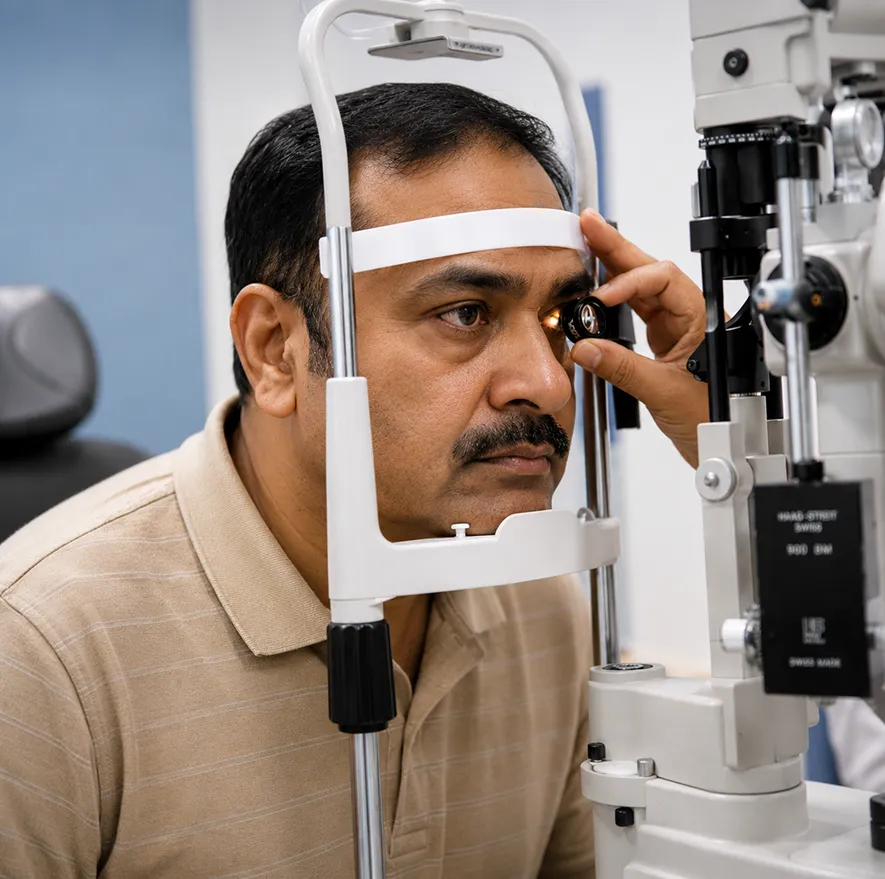
How clinicians assess it
A dilated eye examination identifies retinal changes. An ophthalmologist decides whether monitoring, injections, laser or surgery is needed.
Understand tests and monitoring →
Recognise when the next step needs urgent care
Sudden vision loss, new flashes or a sudden increase in floaters needs urgent eye assessment. Do not wait for a routine Ayurveda appointment.
Continue the follow-up and prescribed treatment agreed with your treating clinician. A routine enquiry or a photograph cannot assess the seriousness of a new symptom.
Understand what the picture shows
A representative food photograph. Meal planning needs to fit your current treatment and health needs; the pictured foods are not a prescribed diet.
Questions for Dr. Shital
- Which eye examination reports and ophthalmology follow-up should I bring?
- How should diabetes and eye care be coordinated?
Original clinic photograph. A photograph does not establish a diagnosis, a treatment result or completed medical review of this page.
Ask the clinic about your consultationGeneral educational information · Sources checked 22 October 2026 · Named clinician review pending. Tests described here are selected according to need; this does not confirm on-site availability.
Why screen when vision seems clear?
Diabetic retinopathy affects blood vessels in the retina and may have no early symptoms. An eye specialist decides the appropriate examination and follow-up interval. Routine vision testing alone is not a substitute for the recommended retinal assessment.
What treatment might an eye specialist recommend?
Depending on the findings, care may include observation, eye injections, laser treatment or surgery. These are specialist decisions and are not advertised as services at this clinic. Delaying indicated eye treatment can threaten sight.
What can supportive diabetes care contribute?
Discuss glucose and blood pressure management with your medical team. Bring eye reports to your diabetes consultation so advice takes the retinal condition into account. Ayurveda must not be presented as a way to restore damaged vision or replace retinal treatment.
When should I seek urgent care?
Sudden vision loss, new flashes or a sudden increase in floaters needs urgent eye assessment. Do not wait for a routine Ayurveda appointment.
Clear vision does not replace an eye examination
Diabetic retinopathy affects blood vessels in the retina at the back of the eye. Early changes may not cause obvious visual symptoms.
Keep eye care on the plan
A dilated eye examination can identify changes that are not noticeable in everyday vision. Ask your eye-care clinician when your next examination is due.
Bring the eye specialist’s findings
Share the examination report and any recommended treatment or follow-up. Glucose, blood-pressure and cholesterol management belong alongside appropriate eye care; an Ayurvedic consultation does not replace retinal treatment.
Sources for this explanation
Sources checked 21 October 2026. Prepared by the clinic information team; named clinical review is pending. Sources explain general medical information and do not demonstrate a Pimpri treatment outcome.
What information helps with diabetic retinopathy?
Bring what you already have. These discussion points are not a prescription for tests or a statement that every investigation is performed at the clinic.
Glucose history
Bring dated glucose and HbA1c results, with a note of recent medicine changes or illness.
Medicines and low readings
Explain your current treatment and any episodes of low glucose or missed meals.
Complication follow-up
Bring existing eye, kidney, nerve, foot or cardiac reports relevant to the concern.
Daily routine
Discuss meals, work, sleep, activity and practical barriers before agreeing on a plan.
A plan that fits your diagnosis and daily life.
Discuss the role and limits of supportive care alongside your existing treatment.
Food and everyday routines
Ask for a meal plan that fits your medicines and other health needs. Clarify how to manage missed meals, illness or fasting; do not copy an intensive programme diet yourself.
Diet and nutrition information →Ayurveda and Panchakarma suitability
Discuss the proposed CDC components, any suitable Panchakarma, herbal products and monitoring with the clinician. A programme label is not a prediction of your result.
Ask which procedure is proposed, what preparation involves, what it costs and when it should be delayed or avoided.
Understand Panchakarma →Follow-up and coordination
Agree what readings to record, how to seek advice about low glucose and which complication screening or specialist reviews should continue.
Understand the care approach →Leave the consultation with clear next steps.
- What is being assessed, and what remains uncertain?
- Which part of the proposed plan is intended to support my particular concern?
- What preparation, fees, precautions and follow-up apply?
- Who should I contact if symptoms change or the plan causes discomfort?
From your first question to a clear follow-up plan.
A routine consultation about diabetic retinopathy starts with your history. The clinician decides what is appropriate; this is not a fixed treatment protocol.

Meet your doctor →
Bring your health context
Prepare the reports and prescriptions you already have, together with your questions.
Discuss assessment and suitability
Explain your current treatment and any recent changes. Ask whether specialist review is needed.
Understand the proposed plan
Discuss suitable care, food and routines, preparation, limitations and fees before agreeing.
Confirm your follow-up
Clarify what to monitor, who reviews progress and when to seek medical advice.
How do I prepare for a Pimpri consultation?
Bring current prescriptions, relevant reports and your questions. Tell Dr. Shital about recent hospital treatment, allergies, herbs and supplements. Confirm suitability and the scope of supportive care before starting a programme. Tests mentioned in educational guidance are not automatically available at this clinic.
Continue prescribed treatment unless your treating clinician changes it. This clinic does not replace emergency, cardiology, kidney or eye-specialist services.
Meet Dr. Shital More-MhaisaneFrequently asked questions
How can Madhavbaug Pimpri support my care?
The clinic can support glucose and blood-pressure management and daily routines alongside your ophthalmologist’s care. Bring eye reports and prescriptions. Ayurvedic support should not delay retinal screening or recommended eye treatment.
Do I need screening without symptoms?
Yes, diabetes-related eye changes can be silent. Follow the screening schedule recommended by your diabetes and eye-care teams.
Are retinal injections or laser available here?
This clinic does not advertise retinal procedures. An ophthalmologist provides the appropriate retinal assessment and treatment.
Sources and further reading
These sources explain general medical care; they do not establish outcomes for Ayurvedic treatment or for this clinic.