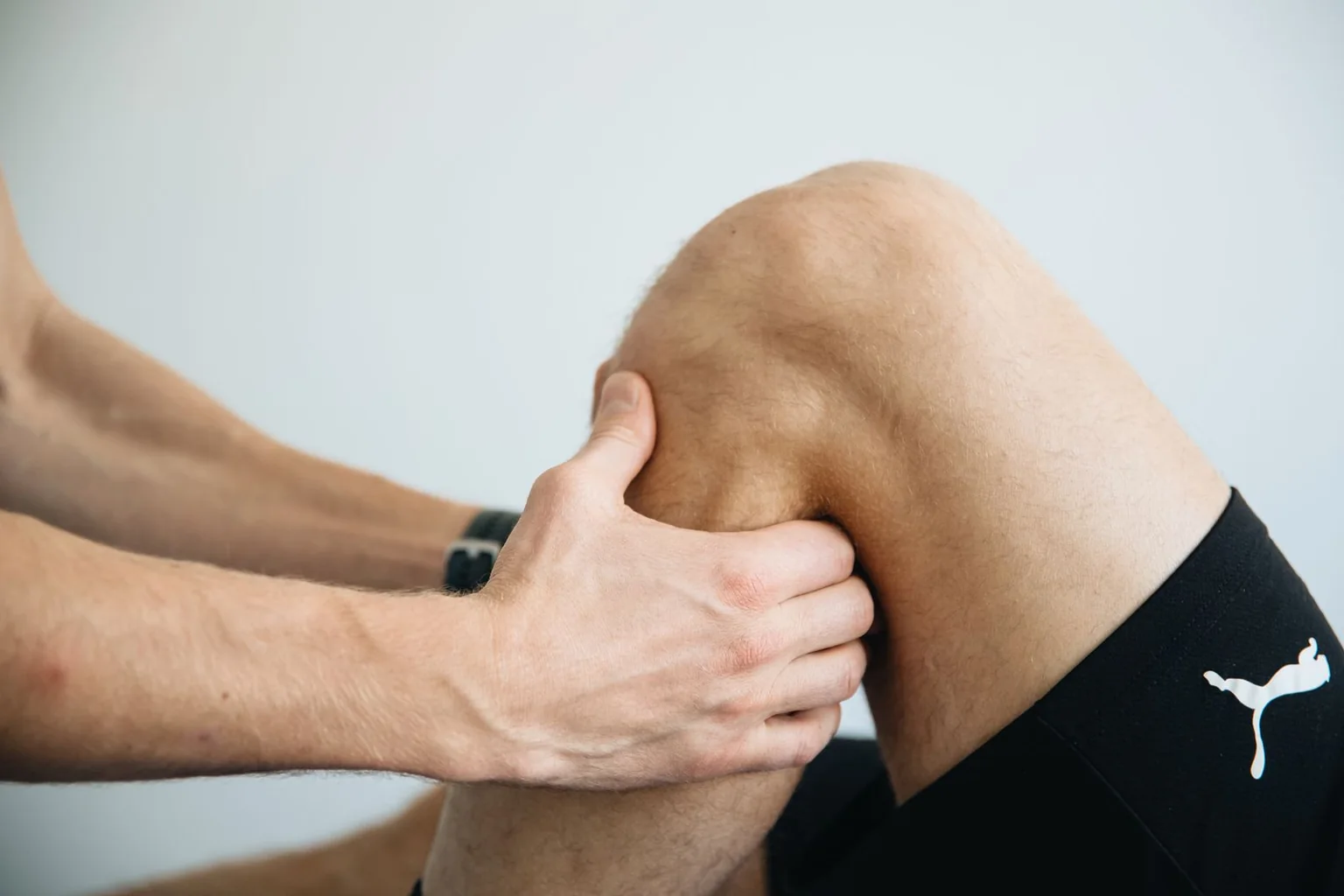
What joint pain means
A joint is the place where bones meet and movement is supported by several tissues. Discomfort felt around a joint can arise from the joint itself or nearby structures. People may describe aching, stiffness, tenderness, swelling, catching or difficulty moving. These descriptions help explain the experience, but none identifies the cause on its own. A person with a painful knee may need a different approach from someone with swollen finger joints, even when both use the word arthritis.
Pain also has a practical context. It may interrupt walking to work, standing in a kitchen, using stairs, opening a container or getting comfortable at night. Explain these limitations during a consultation. The purpose of assessment is not simply to attach a label; it is to decide what needs attention, what can be managed safely and what a meaningful improvement would look like for you.
Different patterns point toward different questions
A recent twist, fall or unusual physical task can raise questions about an injury. Gradually developing discomfort may lead to discussion of osteoarthritis or other causes. Persistent swelling, prolonged stiffness or symptoms involving several joints may require evaluation for an inflammatory condition. A suddenly painful, hot joint can indicate a problem that needs prompt medical attention. These are patterns to report, not rules for diagnosing yourself.
Describe when the symptoms began and whether they are changing. Mention whether one side or both sides are affected and whether discomfort moves between areas. Note whether pain is mainly linked with activity, appears after rest or remains present at night. If a symptom is unfamiliar or worsening, do not assume that an old diagnosis explains it. A fresh clinical review can identify whether the original explanation still fits.

Prepare a history that helps the consultation
You do not need a perfect medical diary. A short account of the beginning, location, usual pattern and effect on daily life is useful. Bring previous diagnoses, relevant reports, prescriptions and information about an earlier operation or injury. Include medicines obtained without prescription and products applied to the skin. Explain what you have tried, what seemed helpful and whether anything caused a reaction.
Tell the clinician about diabetes, kidney or heart disease, pregnancy, an immune-related condition and any recent infection. These details can affect assessment and the safety of different treatment options. Family history can be relevant, but another relative’s experience does not establish your diagnosis. If describing symptoms is difficult, a family member can help you prepare a factual summary while keeping your own priorities at the centre.
What assessment may involve
A clinician combines the history with an appropriate examination. This can include looking at the affected area, checking movement and discussing strength, function and symptoms elsewhere. The exact examination depends on the problem. You should understand what is being examined and be able to mention discomfort or request a pause. A clinical explanation should connect what was found with your main concern.
Investigations are chosen to answer a question. Not every joint problem requires a scan or a large group of blood tests. Existing results may be enough for an initial discussion, while other situations need further testing or referral. Ask what a proposed investigation would help clarify and whether it would change the management plan. Testing is most useful when the result is interpreted with symptoms and examination rather than treated as an isolated verdict.
Understand reports without becoming defined by them
Medical reports can contain unfamiliar terms. Ask the clinician to explain which findings are relevant to your current symptoms and which may not be the main problem. A report should not be used to promise that one therapy will repair every structural change or to suggest that all movement is dangerous. Equally, a reassuring report should not dismiss a person whose symptoms still need assessment.
Bring earlier results when available so the clinician can review context instead of relying on a photograph of one sentence. Avoid ordering repeat investigations solely because an advertisement offers a package. If a new test is recommended, understand its purpose, preparation, possible limitations and who will discuss the result with you. A written next step is more helpful than leaving with a result that no one has explained.
When osteoarthritis is part of the discussion
Osteoarthritis is one possible explanation for joint pain and stiffness. Its management considers symptoms, movement and everyday function rather than a scan alone. Information, appropriate exercise and weight-management support where relevant are important elements of established care. The plan should reflect the joint involved, your health, previous activity and personal priorities.
An osteoarthritis diagnosis does not mean that every day will feel the same or that the only possible future is an operation. It also does not justify a guarantee that cartilage will regrow after massage or oil application. Discuss the range of suitable options and how their value will be assessed. The useful question is which approach helps you participate more comfortably and safely in life, while keeping other necessary treatment available.
Inflammatory symptoms need an appropriate pathway
Some joint conditions involve inflammation that requires a different management approach from ordinary activity-related discomfort. Tell the clinician about persistent swelling, symptoms in several joints, skin changes or other symptoms that occur alongside joint pain. If an inflammatory condition is suspected, a rheumatology or other specialist assessment may be important. Supportive treatments should not postpone this evaluation.
A traditional explanation and a modern medical diagnosis can be discussed respectfully without treating them as interchangeable. Terms used in Ayurveda do not replace the assessment needed to identify rheumatoid arthritis, gout, infection or another condition. If you have already been prescribed disease-modifying treatment or another specialist medicine, continue the agreed plan unless the responsible clinician changes it. Improvement in comfort does not automatically show that the underlying condition no longer needs monitoring.

Build a movement plan you can sustain
Movement advice should begin at a level that fits your current ability. A clinician or rehabilitation professional can help identify suitable activities and a manageable progression. The aim is not to compare your performance with someone else, but to improve confidence and function safely. Explain any fear of falling, previous exercise difficulties or limitations caused by another medical condition.
A plan that fits ordinary life is easier to maintain. Discuss how movement could be included around work, travel, family duties and rest. If symptoms increase with an activity, explain what happened rather than either pushing through every difficulty or abandoning all movement indefinitely. Significant new symptoms need reassessment. Guidance should help you distinguish an expected response from a reason to pause and seek help, using advice specific to your diagnosis.
Balance activity and rest
People sometimes alternate between doing everything on a relatively good day and avoiding activity when symptoms return. Discuss whether a steadier pattern would be more manageable. Pacing means planning tasks realistically and allowing changes of position or breaks when appropriate; it does not mean accepting permanent inactivity. The plan should preserve the activities you value where possible.
Choose a small number of tasks to review, such as a familiar walk, preparing a meal or working comfortably for a period. Notice which adjustments make the task easier. A supportive chair, a less demanding arrangement of frequently used items or help with a heavy task may be worth discussing. Practical changes do not replace medical assessment, but they can make the wider plan more usable while treatment and rehabilitation are being considered.
Understand the role and limits of medicines
Medicine choices depend on the cause of pain and the person taking them. Kidney disease, stomach problems, heart conditions, blood-thinning medicines and other factors may affect what is suitable. Do not assume that a product bought without prescription is automatically appropriate for repeated use. Tell the treating clinician about everything you take, including topical products and supplements.
This page does not prescribe a painkiller, dose or course. If treatment is advised, ask what it is intended to help, how to use it safely and when to review it. Mention inadequate relief or side effects rather than increasing treatment yourself. Another patient’s medicine list is not a template for your care. Where several clinicians are involved, make sure each has an accurate current list to reduce conflicting advice.
Where an Ayurvedic consultation may contribute
An Ayurvedic discussion may explore symptoms, daily routine, food, sleep and traditional clinical concepts alongside the diagnosis and current treatment. It can provide a setting for individualised discussion and suitable supportive care. If a procedure or preparation is proposed, ask the clinician to explain the intended purpose in everyday language and how it connects with your own goals.
Positive care is compatible with realistic expectations. A person may value relaxation, attention to routine or a supervised local therapy without claiming that the intervention cures every type of arthritis. Evidence varies by intervention and condition. Distinguish traditional rationale, professional experience and direct clinical research. A treatment can be discussed respectfully while remaining clear about what has not been established and what other care should continue.
External therapies are not all the same
Names such as Janu Basti, Kati Basti, Abhyanga or Swedana describe different external procedures or areas of application. Rectal Basti is a different route of treatment. The precise method, preparation, intended area and precautions must be explained before deciding. A broad Panchakarma label is not enough information for consent and does not show that every listed option is appropriate.
Warmth, pressure and contact materials require attention to skin condition, sensation and comfort. Mention reduced sensation, wounds, rashes, allergies, recent surgery or difficulty with the proposed position. Stop and report excessive heat, unexpected pain, dizziness or distress. The procedure should be professionally selected and supervised; descriptions and photographs on a website are not instructions for trying it at home.
Support nutrition without extreme promises
Food discussions should consider your appetite, usual meals, medical conditions, preferences and resources. A sustainable pattern is more useful than a restrictive list presented as a cure for every joint problem. If weight management is clinically relevant, ask for respectful support that also considers mobility and medicines. Joint symptoms deserve proper assessment at every body size.
Be careful with rapid-loss programmes, prolonged fasting and products described as removing all joint toxins. Such promises can distract from diagnosis and may create additional risks. If an Ayurvedic preparation or supplement is considered, its contents, purpose and interactions should be discussed. A natural label does not guarantee safety. Keep prescribed treatment and appropriate monitoring coordinated with the clinician responsible for your overall care.
Consider sleep, work and confidence
Persistent discomfort can affect sleep, concentration and confidence in movement. These effects matter and should be included in review. Explain whether pain wakes you, whether worry makes it harder to rest and whether work tasks have become difficult. The clinician may consider a combination of symptom management, rehabilitation, practical adjustments and support for wellbeing.
Avoid describing the problem as entirely physical or entirely emotional without assessment. Pain is a real experience, and several factors can influence how a person copes with it. A plan can address sleep and stress while still investigating a joint problem appropriately. If symptoms are affecting mood or causing you to withdraw from usual activities, mention this directly so the care plan addresses the whole impact rather than only a pain score.
Choose meaningful goals and review the response
A clear goal makes follow-up more useful. Instead of only asking whether pain has disappeared, consider whether you can complete a task more comfortably, move with greater confidence or participate in an activity that matters to you. Agree what improvement would be worthwhile and how long an option should be tried before reassessment. Goals may change as the diagnosis and response become clearer.
Review should include unwanted effects and treatments that have not helped. If improvement occurs during several simultaneous changes, do not automatically attribute it to one procedure. If there is little useful benefit, reassessing or stopping an intervention can be a sensible decision. Continuing a package indefinitely is not proof of commitment. The plan should remain responsive to your symptoms, function and preferences.
Plan a consultation in Pimpri
Bring your medical history, current treatment and available reports to the appointment. A short list of priorities can help: the symptom that troubles you most, the task you want to improve and any question about a previous recommendation. Confirm accessibility needs, assistance with mobility and appointment arrangements before travelling. The existing booking route opens the booking provider; opening a page does not itself confirm an appointment.
Ask the clinic which consultations and procedures are currently available, who assesses suitability and whether another professional may need to be involved. This educational guide does not establish a specific joint programme, equipment list, price or timetable. A good visit should leave you with a clearer explanation, a practical next step and an understanding of when and how the plan will be reviewed.
Symptoms that should not wait for a routine visit
A suddenly hot, swollen joint, especially with fever or feeling unwell, needs prompt medical assessment. An injury with severe pain, a visibly altered shape or inability to bear weight can also need urgent attention. Do not arrange an oil or heat therapy first and wait to see whether it settles. Acute symptoms may require a different setting from a routine consultation.
Report new weakness, loss of sensation or other rapidly changing symptoms. If you have a replaced joint, recent operation or immune-related treatment, mention this when seeking help. A familiar history of joint pain does not make every new episode harmless. The safest response is to use the appropriate medical pathway for the new problem while keeping routine care informed about what happened.
Small joints can have a large effect on daily life
Pain in the hands or feet can be easy to underestimate because the affected area is small. Difficulty fastening clothes, gripping a pen, preparing food or walking in ordinary footwear can have a substantial impact. Describe the particular task and whether pain, stiffness, swelling or weakness is the main difficulty. These are different problems and may lead to different questions during assessment.
If symptoms involve several small joints, occur on both sides or are accompanied by persistent swelling, mention that pattern clearly. Do not rely on a massage response to decide whether an inflammatory condition is present. A temporary improvement in comfort does not replace an appropriate diagnostic pathway. Discuss whether occupational therapy, footwear advice, hand rehabilitation or another professional assessment could help. Practical support should be selected for your circumstances rather than purchased from a generic list of devices.
A previous operation changes the context
Tell the clinician about any operation or joint replacement in the affected area and bring the follow-up advice you were given. Explain whether the current symptoms are familiar or new. Pain, heat or swelling in a replaced joint can require an appropriate medical review, particularly if you also feel unwell. Do not assume it is ordinary wear or that an external application is automatically suitable.
Recent wounds, postoperative movement restrictions and advice about weight bearing should be respected. The responsible surgical or rehabilitation team may need to clarify what is appropriate before another procedure is considered. External care is still a clinical decision when it is applied near a healing area. Ask who will coordinate the advice so that you do not receive conflicting instructions. Your recovery plan should remain connected to the professionals who know the operation and its particular precautions.
Recognise a clear explanation of options
A useful explanation includes the likely purpose of each option, the alternatives and the uncertainties. It should help you understand why a clinician is suggesting one approach now and what would lead to a different recommendation later. You can ask for plain language, a written summary or time to consider the information. Deciding against a procedure after an informed discussion is a legitimate choice.
Be cautious about pressure to commit immediately because an offer is about to expire or because another person reportedly improved quickly. Clinical suitability is not established by popularity, a dramatic photograph or the size of a package. Compare options by the diagnosis they address, the expected practical benefit, the relevant risks and the need for follow-up. A clear decision process helps preserve confidence even when the next step is further assessment rather than starting treatment that day.