Start by finding out what detox means in this conversation
A website, spa, supplement label and Ayurveda hospital may all use the word detox while describing completely different interventions. One may mean a food plan; another may mean massage; another may mean supervised purgation. These are not equivalent experiences or risks. Ask for the specific procedure or recommendation in ordinary language before deciding whether it is relevant to you.
The word alone does not establish a diagnosis, identify a toxin or explain how benefit will be measured. A useful conversation replaces a broad promise with details: what concern is being addressed, what the proposed care involves and what outcome would matter. You should be able to understand the recommendation without needing to accept every traditional concept or marketing phrase as a proven medical fact.
Shodhana belongs to a traditional clinical framework
Within Ayurveda, Shodhana is discussed as a therapeutic approach using selected eliminative procedures in appropriate circumstances. Panchakarma is part of that traditional framework. Preparation, the principal procedure and subsequent care are considered together. This is more specific than the popular idea of buying a cleansing drink or following a social-media challenge.
Traditional explanations may use terms such as Dosha, Agni and Ama. These concepts should be described as Ayurvedic reasoning, not as interchangeable names for laboratory abnormalities. For example, Ama should not automatically be translated into a particular heavy metal or a visible deposit in a blood vessel. A clinician can explain the traditional rationale while also clarifying what is known, what is uncertain and which modern medical assessments remain necessary.
The body already has systems that process and remove substances
Liver, kidney, digestive and other bodily functions continuously handle substances from normal metabolism and everyday exposure. A vague feeling of tiredness or heaviness does not prove that these functions need to be reset by a cleanse. Persistent symptoms can have many explanations and deserve an appropriate assessment rather than an automatic toxin label.
Medical treatment for a recognized poisoning, organ disease or substance exposure is a different matter from a general wellness programme. If a specific harmful exposure is suspected, tell a qualified clinician about the substance and timing. Do not attempt to treat it through fasting, induced vomiting or a cleansing product. The need for investigation and treatment depends on the actual exposure and clinical findings.
Begin with the concern you want to improve
Explain what brought you to the consultation: digestive discomfort, a change in bowel habit, poor sleep, difficulty maintaining routines or another concern. Describe its onset, effect on daily life and associated symptoms. A named concern is easier to assess and review than a general wish to become completely toxin-free.
The clinician should consider your history, examination, medicines and available reports before recommending care. Some people may benefit from practical food, activity or sleep guidance without needing a procedure. Others may need further medical assessment before any Ayurvedic intervention is considered. Individualization means choosing appropriately, including deciding that an intensive approach is unnecessary, unsuitable or best postponed.
Panchakarma is not the same package for everyone
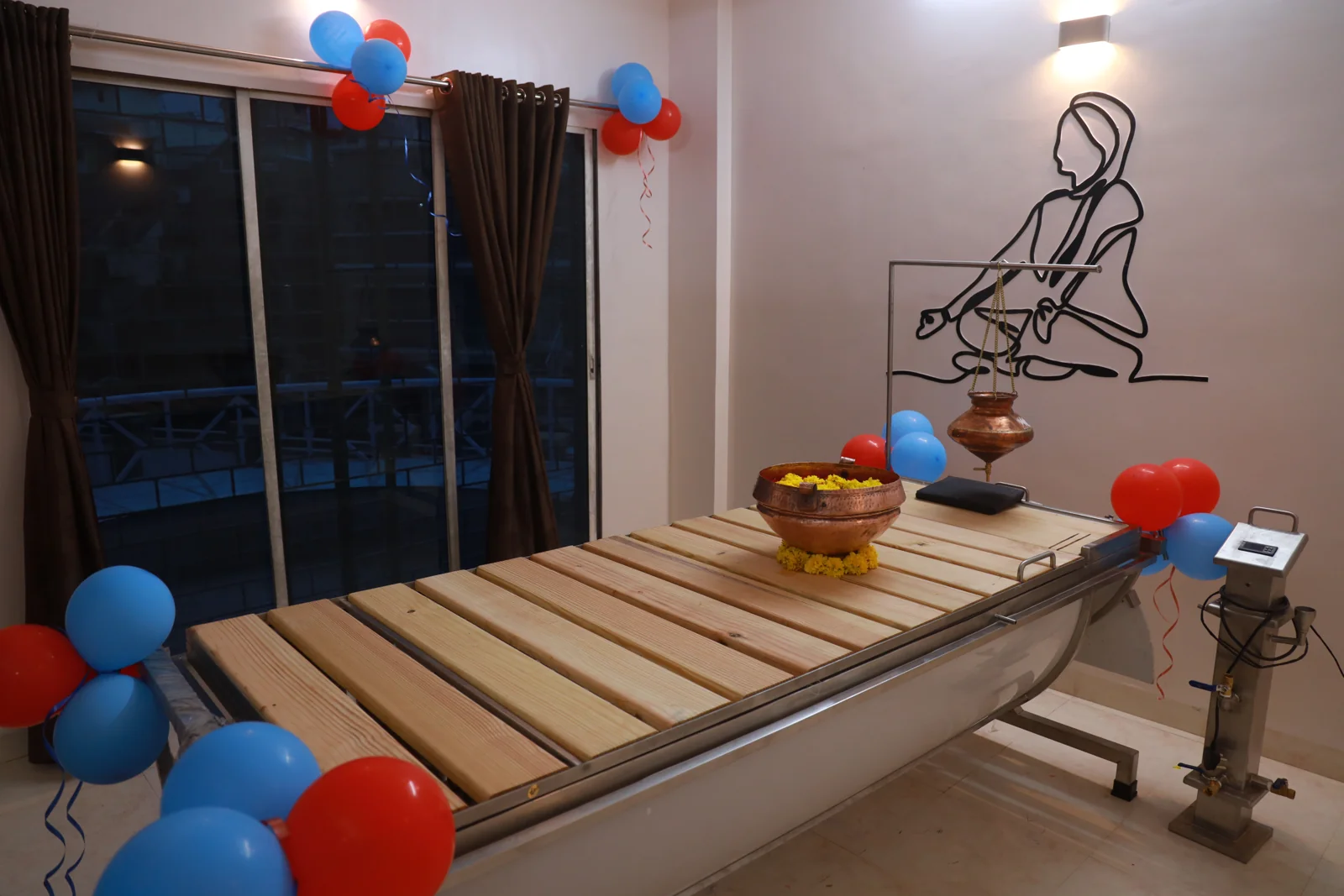
Names commonly encountered include Vamana, Virechana, Basti and Nasya, with classifications varying across traditional descriptions. They involve different routes and purposes. Related preparatory or allied therapies such as Snehana, Swedana, Abhyanga and Shirodhara are also frequently discussed under the broad Panchakarma heading in public-facing settings.
It is not necessary for every person to receive every named procedure. A longer list is not proof of a better plan. Ask which elements are proposed for you, why they have been chosen and whether any are optional. A standard brochure may explain a programme, but it cannot establish individual eligibility. Confirm the actual procedure, professional supervision and local availability rather than assuming a franchise name guarantees an identical plan at every location.
Preparation is an assessed stage, not a home challenge
Traditional descriptions use the term Purva Karma for preparatory care. Depending on the intervention, this may involve selected recommendations about routine or other supervised measures. The details vary with the intended procedure and the person. A general educational page should help you understand that preparation matters without becoming a recipe for doing it yourself.
Do not copy another person's fasting, oil intake, medicine adjustment or restrictive diet. Preparations can affect hydration, bowel function and medicine timing. Ask for instructions specific to the care actually prescribed, in a language you understand. If a recommendation conflicts with advice from another treating clinician, seek clarification before proceeding. Preparation should reduce uncertainty and support safety, not test how much discomfort you are willing to endure.
The main procedure needs a clear explanation and monitoring
Before an intervention begins, understand what will be done, which body area or route is involved and who is responsible for supervision. Discuss positioning, privacy, expected sensations and how to request a pause. Consent is meaningful when you know the proposal and can ask questions or decline without pressure.
Some procedures are relatively gentle external applications; others intentionally produce bowel evacuation or involve administration through a specific route. They should not be treated as equally minor because all are described as natural. Monitoring should reflect the actual intervention and your health. Ask how an unexpected reaction would be recognized and managed, and whether the setting can provide the level of observation that has been recommended.

Aftercare should fit the intervention and the individual
Paschat Karma refers to care after the main intervention in traditional descriptions. Public discussions sometimes reduce this to a universal diet chart, but the practical advice should reflect what was done, your condition and your response. Recovery requirements can differ between a relaxing external therapy and an intervention that affects bowel activity or fluid balance.
Obtain clear instructions about eating, drinking, usual activities, prescribed medicines, follow-up and whom to contact if you feel unwell. Ask which symptoms are expected and which need medical review. Do not extend restrictions or repeat a procedure independently because you assume that more cleansing will produce a better result. The purpose of aftercare is to support recovery and an appropriate ongoing routine, not to keep the body in a prolonged depleted state.
Food guidance should remain nourishing and practical
A useful nutrition discussion considers ordinary meals, appetite, cultural preferences, affordability, work and medical needs. It can identify achievable adjustments without dividing all foods into pure and toxic categories. A plan should be understandable enough to follow at home and flexible enough to review when circumstances change.
Severe restriction, juice-only plans and repeated fasting are not interchangeable with individualized Ayurvedic nutrition guidance. People using glucose-lowering medicines, those who are pregnant, frail or undernourished and people with kidney or other significant disease may face particular risks from abrupt dietary changes. Ask how nutritional adequacy will be maintained and whether advice needs coordination with another clinician. A dramatic short-term scale change does not establish lasting improvement in metabolic health.
More sweating or bowel movements is not a measure of better health
A procedure may produce sweat, increased stools or another noticeable bodily response. That response describes what happened, but it does not by itself prove that disease has been removed. The amount of fluid lost or the intensity of the experience should not become a target to maximize.
A meaningful outcome is connected to the original concern and to safety: daily function, symptoms, nutrition and appropriate clinical measures. If a programme describes success only through the quantity of sweat or stool, ask how that relates to your health goal. Feeling faint, excessively weak or unwell should prompt attention, not praise for completing a demanding cleanse. An unpleasant reaction is not automatically a necessary stage of healing.
Health history changes the suitability discussion
Tell the clinician about heart or kidney disease, blood-pressure concerns, diabetes, pregnancy, recent surgery, ongoing infection and previous reactions to treatment. Explain problems with mobility, sensation or swallowing when relevant. Even a stable long-term condition can affect how an intervention should be selected or monitored.
Include all prescriptions, supplements, herbal products and over-the-counter medicines. Do not leave something out because it is taken only occasionally or seems unrelated. A clinician needs the full picture to consider interactions, hydration, blood-sugar changes and other practical risks. A general declaration that a programme suits everyone is not a substitute for this review, and absence of a previous reaction does not guarantee a future intervention will be suitable.
Know what is in a product and why it is proposed
If a herbal preparation, oil or other product is part of the plan, ask for its name, intended role and relevant precautions. Packaging or a written list helps you share the information with other treating professionals. Avoid relying on an unlabelled mixture or a verbal assurance that ingredients do not matter because the product is traditional.
Natural products can still cause unwanted effects or interact with medicines. Quality, source and composition matter. Ask how concerns are reported and what review is planned. Do not substitute a product bought online for the preparation selected by the clinician, and do not increase the amount in an attempt to strengthen the effect. Product decisions should be specific, documented and connected to an assessed goal.
Read evidence at the level of the actual intervention
A study of one preparation or combined programme does not establish the value of every treatment described as detox. Consider who was studied, the condition, the comparison, the outcomes and the period of observation. Traditional use, a patient story and a controlled clinical study provide different types of information.
Ask whether the evidence concerns the procedure and purpose being proposed for you. Improvement during a programme containing diet, activity, medicines and therapies cannot automatically be assigned to one component. A positive experience can be described honestly without converting it into proof that undefined toxins were removed or that future disease has been prevented. The uncertainty should be part of an informed discussion rather than hidden behind scientific-sounding language.
Set a useful goal without a total-body reset promise
People may value structured attention to their routine, a calmer treatment setting or help making sustainable changes. Those are legitimate experiences to discuss. They do not need to be exaggerated into a guarantee of complete rejuvenation, rapid fat loss or a permanent cure for unrelated illnesses.
Choose a small number of outcomes that matter to your daily life and can be reviewed. This might involve bowel comfort, confidence with meals, a manageable routine or another assessed concern. Ask when the response will be reconsidered and what would lead to changing the plan. A realistic goal makes it easier to recognize both benefit and lack of benefit, and it reduces pressure to interpret every experience as a dramatic transformation.
Consider the practical commitment before agreeing
A programme can involve time away from work, travel, meals, assistance and follow-up as well as the advertised session fee. Ask what is included, what may be arranged separately and whether the proposed course can be changed if it is unsuitable. Confirm appointment arrangements and who to contact between visits.
You should not need to commit to an extended package before understanding the assessment and alternatives. Consider whether the schedule is compatible with your responsibilities and whether the plan can be carried out safely. A less intensive approach may be more practical in some circumstances. The most useful programme is not necessarily the longest or most elaborate one; it is one that has a clear purpose, appropriate supervision and a reasonable plan for review.
Review progress without blaming the patient
At review, explain what improved, what did not and what was difficult to follow. Include new symptoms, changes in appetite or bowel pattern and any additional treatment received. Honest feedback is more useful than reporting a positive result because you feel the course was supposed to work.
If the plan has not helped, reassessment may lead to different care, further investigation or stopping the intervention. That is not a moral failure or proof that you did not cleanse thoroughly enough. A responsible explanation should not blame every setback on hidden toxins or poor discipline. The care plan should adapt to the person and the evidence rather than requiring the person to fit a fixed success story.
Do not turn warning signs into a cleansing reaction
Severe abdominal pain, repeated vomiting, significant bleeding, fainting, confusion, inability to keep fluids down or marked deterioration needs appropriate medical assessment. New chest pain, severe breathlessness or stroke symptoms require urgent hospital care. Do not wait for the end of a course or a routine WhatsApp reply when serious symptoms appear.
Tell the treating team about unexpected symptoms promptly, but do not allow a label such as healing crisis to replace evaluation. The fact that a symptom followed a procedure does not establish its cause or make it harmless. Bring the product details and explain the timing when seeking help. A safety plan should make the next step clear before care begins.
Keep useful changes after the programme ends
If a consultation helps you identify a better meal pattern, manageable activity or a clearer follow-up routine, think about how that can continue without dependence on repeated cleansing courses. Sustainable care is built into ordinary life. A plan should not imply that health is maintained only by purchasing another intensive treatment at fixed intervals.
Ask which changes are relevant long term and which instructions apply only around a specific intervention. Review any restriction that is becoming difficult, unnecessary or nutritionally limiting. Keep appropriate preventive care and prescribed treatment in place. The aim is a clearer, safer approach to your health, with traditional options considered in context, rather than an endless effort to achieve an undefined state of internal purity.
Compare two proposals using the same questions
If you receive different recommendations, compare their actual components rather than the appeal of their names. Write down the proposed intervention, intended goal, preparation, supervision, aftercare and review point. A gentle external session and a course involving purgation should not be compared as though they are interchangeable wellness experiences. The more intensive option needs its own justification; it is not automatically more effective because it produces a stronger bodily response.
Consider what each plan requires you to give up temporarily and whether that is safe and practical. Will it affect usual food intake, travel, work, medicines or assistance at home? Have the reasons been explained? A programme may be feasible for one person and unsuitable for another, even when both have similar symptoms. Asking about these details is part of informed care, not a sign that you lack commitment to treatment.
You can request time to consider a proposal, discuss it with another treating professional or choose not to proceed. A clinician should be able to explain alternatives, including a less intensive plan or further assessment before treatment. Make sure any written consent matches the procedure actually proposed. A broad form labelled Panchakarma does not explain every route, preparation or risk. Clear decisions are more valuable than agreeing quickly because an offer or package appears time-limited.