Understand the name and route
Manya and Greeva are terms used for the neck or cervical region in different Ayurvedic descriptions. In this context, Basti refers to holding a selected oil over the external skin within a retaining boundary. It does not mean administering a preparation into the rectum, injecting the spine or placing medicine into a joint. Ask for the precise name and route if a treatment plan simply says Basti.
The procedure may be discussed with other external Ayurvedic therapies, but the names do not describe an identical experience. Abhyanga involves oil application or massage, while a local retaining procedure keeps material over a selected area. Steam or bundle fomentation has a different method again. Knowing which intervention is actually proposed helps you understand preparation, precautions and consent.
A page explaining a traditional procedure is not confirmation of a service slot, a particular oil or a fixed course at Madhavbaug Pimpri. Availability and clinical arrangements must be checked directly. Most importantly, seeing your symptom named on a website cannot establish that this is the right procedure for you.
Neck pain is not one condition
Neck discomfort may involve muscles, joints, nerves or other structures, and sometimes a different health issue needs consideration. It can follow an awkward position, an injury or a gradual change, but those descriptions do not replace an assessment. Symptoms that look similar on a short online questionnaire may require different management when the full history is known.
Explain the location, duration and pattern of the problem. Does discomfort stay in the neck, spread across the shoulders or travel into an arm? Is movement restricted? Do symptoms appear during work, at night or after a particular activity? Mention previous injuries, operations and episodes, including whether the current problem feels different from what you have experienced before.
Terms such as cervical spondylosis on an old report do not automatically explain every new symptom. They also do not mean that every person needs a scan or that degeneration must inevitably become disabling. The clinician should interpret a report alongside your current function, examination and concerns, and explain when further evaluation is useful.
Describe arm and hand function clearly
Tingling, numbness or weakness in an arm or hand can change the assessment. Tell the clinician if you have started dropping objects, finding buttons difficult or struggling with a task that was previously easy. Explain whether the change is stable, intermittent or getting worse. These are practical observations; you do not have to decide yourself which nerve might be involved.
New or progressive neurological symptoms should not be dismissed as ordinary muscle tightness. Difficulty walking, loss of balance or symptoms affecting both arms deserve appropriate medical attention. A local oil application should not delay an examination or referral that is needed to understand the cause.
If symptoms occur after a significant accident or neck injury, follow appropriate urgent-care advice rather than arranging routine therapy first. Avoid repeatedly testing a painful movement to see whether it still hurts. Describe what happened and let the clinical team decide which examinations are safe and necessary.
Headache and dizziness need their own context
Neck pain and headache may occur together, but one should not automatically be assumed to explain the other. Describe where a headache begins, how it develops and whether it comes with visual changes, nausea or other symptoms. A new headache pattern may require a different discussion from a familiar episode of neck stiffness.
Dizziness also needs careful description. Some people mean spinning, others faintness, unsteadiness or a vague feeling of imbalance. Explain when it happens, how long it lasts, whether position changes bring it on and whether hearing or vision changes occur. These details can help determine whether another type of assessment is appropriate.
Sudden dizziness with weakness, difficulty speaking, double vision, severe new headache or marked loss of balance requires urgent medical help. Do not wait to see whether a warming procedure improves it. If dizziness makes travel unsafe, do not drive or operate machinery while arranging care.
What to share before an appointment
Bring available reports and advice from a physiotherapist, orthopaedic specialist, neurologist or other treating clinician. Include any restrictions after injury or surgery. A proposed Ayurvedic plan should fit with necessary ongoing care rather than creating a separate set of instructions that contradict it.
List prescribed medicines, supplements and occasional products, not only the medicines taken every day. Tell the clinician about diabetes, reduced skin sensation, significant cardiovascular illness, pregnancy, allergies, recent infection or any condition affecting the ability to lie comfortably. A person’s general health can matter even when the procedure is applied only to the neck.
Explain previous experiences with oils, massage or heat, including irritation, dizziness or worsened symptoms. A positive response in the past can be useful information, but it is not automatic clearance for the same procedure now. Health, skin and symptom patterns may have changed.
What a professionally supervised session may involve
The team should first identify the proposed area and explain the material, intended purpose and expected sensation. Positioning, clothing and draping should be agreed before treatment begins. If lying face down or holding the head in a particular position is difficult, discuss that early rather than trying to tolerate an unsuitable arrangement.
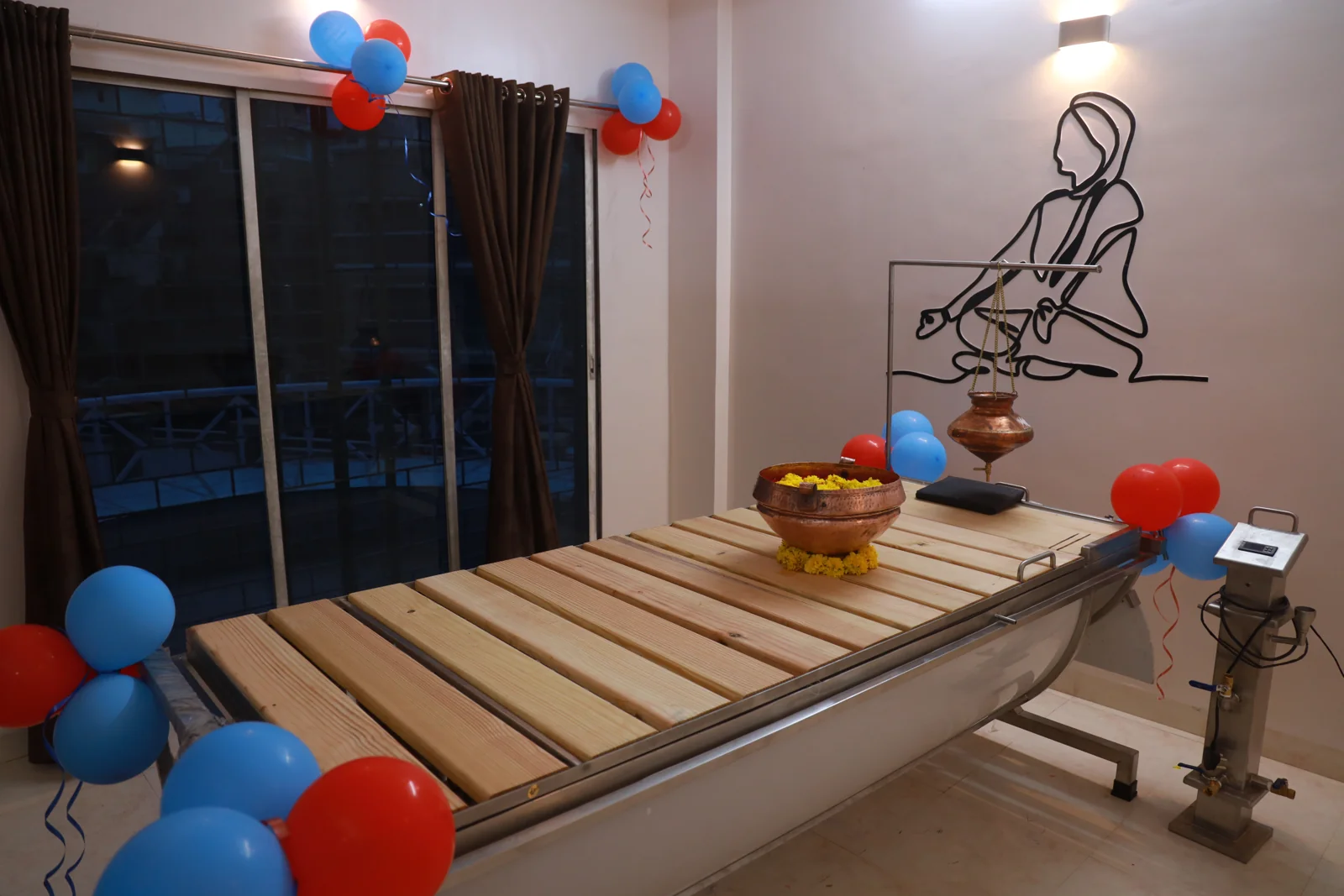
A retaining boundary is used externally and the selected application is managed by the professional team. The important patient information is how comfort and skin response are checked, who supervises and how you can ask to pause. This overview is not a recipe for oil preparation, temperature selection or a home procedure.
The neck should not be forced to fit the equipment. Manya Basti is not synonymous with forceful manipulation or traction. Any additional movement or technique should be explained separately. Tell staff immediately about burning, itching, increased pain, nausea or distress. You remain entitled to stop even after a session has begun.
Traditional rationale without exaggerated claims
Ayurvedic descriptions may relate neck stiffness and discomfort to Vata-related patterns or qualities of movement, dryness and tension. A clinician may use that framework when considering a local oil therapy. Traditional language can be meaningful without being translated into unsupported claims that an external application rebuilds vertebrae or reverses every structural change.
The practical aim may involve comfort or an opportunity to engage more easily with a wider care plan. A person might describe feeling more relaxed or less tight after a session. That experience should be listened to, but it should also be distinguished from evidence that a nerve problem has resolved or that future symptoms cannot recur.
Good expectations are specific and modest enough to evaluate. Ask which difficulty the procedure is intended to address and what other care remains important. A plan can be positive while acknowledging that an option may not help sufficiently and may need to be changed.

What evidence can and cannot establish
Institutional lists and practice guidelines establish that Greeva Basti is used within professional Ayurveda. They are different from robust evidence that it is effective for every type of neck pain. The Ministry of Health Malaysia’s external-Basti guidance explicitly discusses limitations in the available trials. That caution should remain part of a patient-facing explanation.
Some research considers several therapies together. If oil retention, massage, exercise, medicines and other changes are introduced as a combined programme, an improvement does not reveal the independent contribution of one part. The diagnosis, comparison group, sample size and outcome measured affect how confidently a finding can be applied.
Ask whether the evidence concerns people with a similar problem to yours and whether it measured useful function, short-term comfort or another outcome. A statement that something has been studied is not equivalent to a guarantee. A testimonial or a clinic photograph cannot remove uncertainty about your own response.
Make desk and phone use practical
People often worry that their posture alone caused the problem. Neck symptoms usually deserve a broader conversation than a single photograph of someone looking down at a phone. Discuss how long you remain in one position, the demands of your work and whether you have opportunities to change tasks. Comfort and variation may be more useful goals than trying to hold a rigid ideal posture.
Consider the tasks that are actually difficult: reading a document, using two screens, driving, looking over a shoulder or maintaining a conversation at a counter. Describe what happens during the task and what helps. A practical adjustment should fit the work rather than require an unrealistic setup that cannot be maintained.
A clinician or rehabilitation professional can help judge whether changes to activity, exercise or working arrangements are appropriate. An external therapy should not replace this problem-solving. If work needs temporary modification, agree how that will be reviewed rather than assuming that ordinary neck movement must be avoided indefinitely.
Discuss sleep and rest without rigid rules
Pain can disturb sleep, and poor rest can make coping with symptoms harder. Explain whether you struggle to find a comfortable position, wake repeatedly or feel that morning stiffness affects the day. The useful question is what is happening for you, not whether you have bought a particular pillow promoted online.
Pillow and sleeping-position advice should be comfortable and individual. Do not force the neck into a position because a product claims to correct alignment. If symptoms are severe at night, are changing or occur with other concerning features, discuss them medically rather than treating bedding as the whole explanation.
If a relaxation-oriented procedure is considered, keep the aim clear. Feeling calmer may be welcome, but it does not automatically treat an underlying sleep disorder. Persistent insomnia, loud snoring with interrupted breathing or major daytime sleepiness can need separate assessment and appropriate treatment.
Movement and rehabilitation remain important questions
An appropriate movement plan depends on the diagnosis and the person’s health, symptoms and confidence. Ask whether a physiotherapy or rehabilitation assessment would be useful. Do not copy a forceful stretching routine from a video simply because it is labelled for cervical pain, and do not abandon an existing specialist plan for a new procedure.
Fear can make ordinary movement feel unsafe. Tell the clinician if you have stopped activities because you are worried about damage, even when you are unsure which movement is harmful. A helpful explanation can distinguish a reasonable temporary precaution from unnecessary long-term avoidance.
Returning to a valued activity may need a gradual plan. The plan should identify what you can currently manage and what would make reassessment necessary. A procedure that feels soothing is best evaluated within that wider recovery or management context, rather than as an isolated event expected to solve every difficulty.
Skin and heat safety need individual attention
Report a rash, eczema, open skin, a recent wound or a previous reaction to oils or other topical preparations. Explain whether any product causes itching, redness or swelling. The retaining material can also be relevant to allergy or irritation. A label such as herbal or natural does not establish that a preparation is harmless for every person.
Reduced skin sensation can make warmth difficult to judge reliably. Mention diabetes-related nerve changes, neurological illness or an injury affecting sensation. The team should not rely only on whether you describe the application as painful. It should decide whether the procedure is appropriate and how monitoring will be carried out.
Unexpected discomfort is information to report, not something to endure as proof that treatment is acting deeply. Ask how the application will be stopped if necessary and what to do if irritation appears later. A clear response plan is part of professional care.
Choose outcomes that matter outside the treatment room
A useful goal might be turning comfortably to observe traffic, reading for a manageable period, sleeping with fewer interruptions or completing a familiar household task. Choose a goal connected to your diagnosis and priorities. A promise that the neck will become completely normal is less useful than a specific outcome you and the clinician can review.
When evaluating change, include exercise, medicine, workload and sleep changes that occurred alongside the procedure. A combined plan may help without demonstrating that every component was necessary. Describe how long any benefit lasted and whether it translated into daily function.
If symptoms are not improving, are spreading or keep returning quickly, ask for reassessment rather than automatically repeating the same course. Changing or stopping an insufficiently helpful intervention can be a sensible decision. The point of follow-up is to guide the next step, not to obtain a positive report from every patient.
Plan consent, practical arrangements and travel
Before committing, confirm current availability, supervision, the proposed schedule and the fees. Ask which parts are optional and what happens if a course is stopped. You can request information in a language you understand and take time to consider the proposal. An explanation of alternatives should not be replaced by pressure to purchase a package.
Clarify privacy, draping and any need for assistance or a chaperone. If another person helps with your care, include them with your permission in practical arrangements. Consent to a procedure is separate from permission for photographs, recording or marketing use.
Consider the journey home according to your actual symptoms. If you cannot turn the head sufficiently to observe traffic or feel dizzy or unsteady, independent driving may be unsafe. Arrange appropriate help and ask for advice relevant to the day’s care rather than assuming the same travel rule applies to everyone.
When neck symptoms need urgent help
New or worsening weakness, marked clumsiness, unsteadiness or symptoms affecting both arms can require timely medical assessment. A stiff neck with fever, severe headache or significant illness should not be assumed to be an ordinary muscle problem. A serious injury also needs the appropriate emergency pathway.
Stroke-like symptoms, sudden severe headache or a sudden major change in speech, vision or balance need urgent hospital care. Do not delay while seeking a routine clinic opinion, waiting for a message reply or trying a local application.
An informed choice of supportive care keeps necessary specialist pathways open. The clinician should explain when a procedure is inappropriate or when another assessment should happen first. Knowing those boundaries can make the overall plan more trustworthy and more useful.
Keep a simple record without making pain the whole day
A brief symptom record can help when the pattern is difficult to remember during an appointment. Note the activity most affected, any symptom spreading into the arm and any change that concerns you. It can also be useful to mention whether the day included unusually long travel, a demanding work task or poor sleep. The record does not need to become an hourly test of how much the neck hurts.
Avoid interpreting every small fluctuation as new damage or as proof that one session worked or failed. Symptoms can vary, and a clinician should help make sense of the pattern. The important information is a meaningful change in function, a sustained trend or a new warning sign. If keeping a diary increases worry, discuss a simpler way of reviewing progress.
Bring the record to a planned review and compare it with the original goals. Ask what should continue, what needs adjustment and what would make another assessment appropriate. You should leave understanding the next step rather than feeling that any persistent discomfort means you must automatically buy another course.