What Snehana means in everyday language
Snehana is broader than an oil massage. In Ayurvedic practice, it refers to the use of a selected unctuous substance through a particular route for a stated therapeutic or preparatory purpose. The substance, route and context should be explained separately. A photograph of a massage does not tell a patient whether the proposed care is external application, a local oil procedure or internal administration.
This distinction matters because those options have different practical requirements and risks. External oil may contact the skin; an internal preparation is swallowed and becomes part of the person's overall dietary and treatment plan. The traditional term is a starting point for explanation, not enough information for consent. Before making arrangements, ask for the full name of the procedure and an ordinary-language description of what is intended.
Its place within the Ayurvedic care framework
Ayurvedic institutions describe Snehana among the measures that may prepare a person for selected Panchakarma procedures. It may also be discussed separately as supportive external care. Traditional explanations refer to qualities such as unctuousness, softness and movement, and to an individual's assessed Ayurvedic pattern. These ideas belong to that clinical framework and should be described as traditional reasoning.
They should not be translated automatically into claims that an oil removes measurable toxins, dissolves cholesterol, repairs nerves or cures every condition described as a dosha imbalance. A responsible explanation connects the traditional rationale to a realistic patient goal and explains what remains uncertain. The clinician should distinguish an established biomedical diagnosis, an Ayurvedic assessment and the particular outcome being considered rather than treating those three things as interchangeable.
External and internal Snehana are different
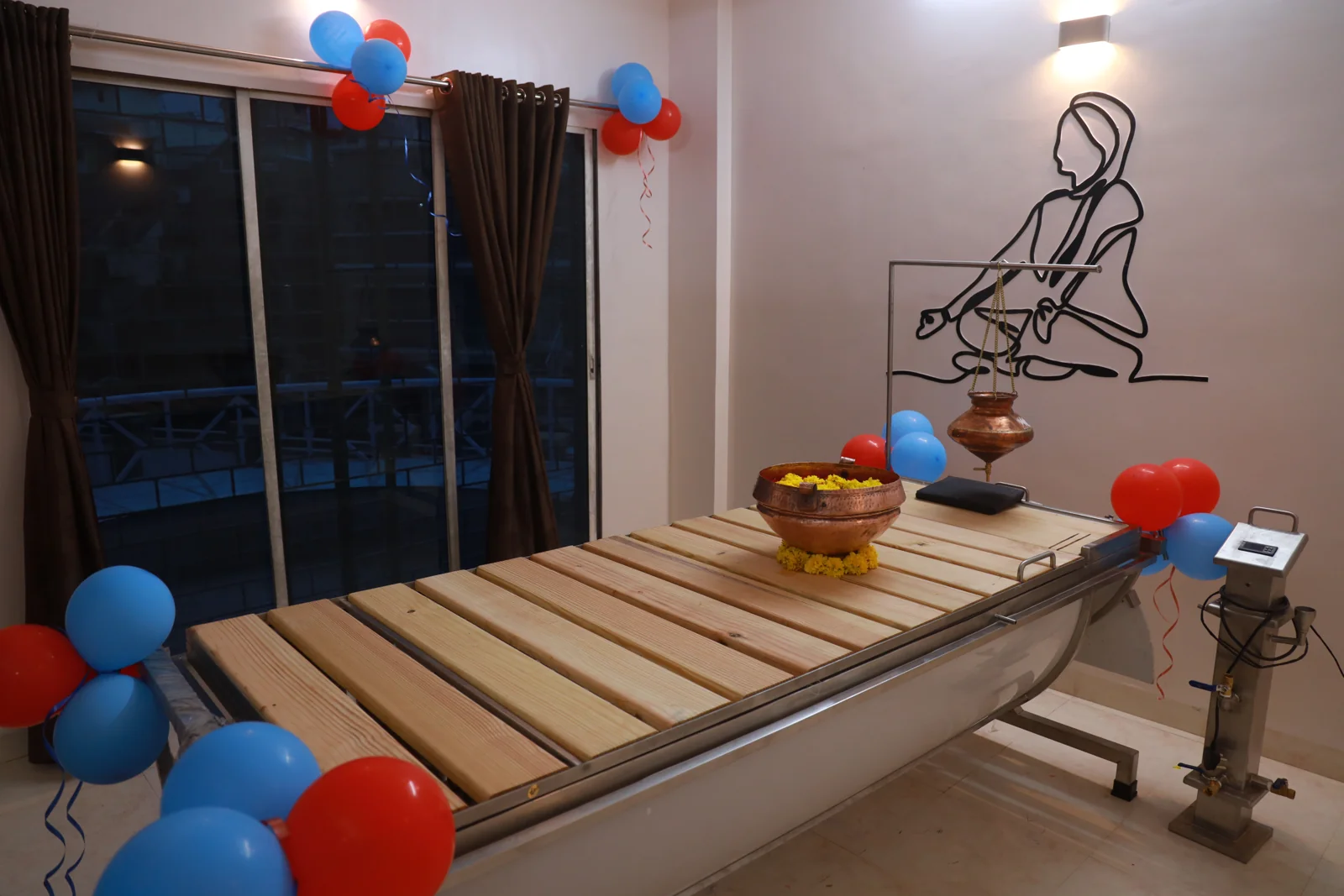
External Snehana may include oil application or a named procedure involving the skin. Abhyanga is one familiar example, but not every external application is a full-body massage. A local application, a retained-oil procedure and a forehead-stream procedure have different names and arrangements. The body area, intended experience and professional supervision should be clear.
Internal oleation, sometimes discussed using terms such as Snehapana, is a separate clinical decision. It is not a recommendation to drink cooking oil or ghee for general wellness. The clinician must consider the presenting problem, digestion-related symptoms, medical conditions, medicines and the intended next step. A general website cannot determine the preparation, amount, schedule or suitability. If you are uncertain which route has been suggested, clarify it before following any instructions.
Start with the concern that matters to you
People may ask about Snehana because of stiffness, a desire for relaxation, an interest in Ayurveda or preparation for another proposed procedure. These are different reasons for seeking care. Explain your actual concern: where symptoms occur, how long they have been present, what affects them and how they interfere with ordinary life. A procedure should have an understandable purpose rather than being selected solely from a list.
For an external session, a goal might involve comfort or a more manageable care experience. For preparatory use, the clinician should explain why it is being considered before a particular procedure and what observations will guide the next decision. Neither purpose establishes that everyone needs oleation. Assessment can lead to modification, postponement, another approach or a decision not to proceed at all.
The health history behind an individual decision
Bring an accurate list of prescribed medicines, over-the-counter products, Ayurvedic preparations and supplements. Include products taken occasionally and anything you have already started for cleansing or digestion. Explain recent illness, hospital treatment, operations, pregnancy or pregnancy plans, allergies and previous reactions to oils or topical products. These details can change what is appropriate.
For internal use, mention swallowing problems, recurrent vomiting, abdominal pain, significant reflux or a diagnosed digestive condition. For external use, describe wounds, rashes, altered sensation or a recent skin treatment in the proposed area. Explain any heart, kidney or liver condition and restrictions given by another clinician. Providing the information does not mean the procedure is automatically unsafe; it gives the responsible clinician the context needed to make a specific decision.
What an assessment should help clarify
An assessment should identify the concern being addressed and decide whether further examination, testing or another professional's input is needed. It should also establish the proposed form of Snehana, why that form is being considered and what alternative options exist. A traditional assessment should not become a reason to ignore a new symptom that requires medical evaluation.
Investigations are selected for a clinical question rather than because every person attending an Ayurvedic clinic needs a fixed panel. Bring reports that already exist. If new tests are suggested, ask what they will clarify, where they are performed and how the results will influence the plan. A useful consultation should leave you able to explain the next step in your own words, including any uncertainty or reason to wait.
What an external visit may involve
For external Snehana, the team should confirm the area, materials, draping and positioning before beginning. The proposed application might be local or more extensive, with movement or without massage depending on the named procedure. The clinician and therapist should explain what you are likely to feel and how you can request a pause. This is a description of a supervised encounter, not a home technique.
Comfort is part of the plan. Tell the team if you cannot lie in a particular position, need help turning or prefer a particular arrangement for privacy. Oil should not be applied to an unexplained wound or rash simply because a standard sequence usually includes it. Report burning, itching, breathlessness, nausea or unusual pain immediately rather than assuming discomfort is necessary for benefit.

What an internal plan needs to make clear
If internal oleation is proposed, obtain instructions from the responsible clinician rather than copying another person's schedule. Understand the purpose, the selected preparation, how the response will be reviewed and what would lead to a change or stop. Ask how the plan interacts with regular meals, medicines and any restrictions you already follow. Do not alter those arrangements yourself.
People taking glucose-lowering medicines or following fluid or dietary restrictions may need coordinated advice before any major change in eating. A preparation that is acceptable for one person may not be suitable for someone else. If the instructions are difficult to follow because of work, travel, caring responsibilities or symptoms, say so. The safest plan is one that is understood, feasible and individually supervised, not merely a printed routine handed to everyone.
Understand the materials rather than choosing a product online
The word oil does not describe a single product. Preparations can differ in their ingredients, fragrance, base substance and intended route. Ask what will be used and whether it contains anything to which you have reacted before. A product's traditional name or natural origin does not guarantee that it cannot cause irritation, allergy or an interaction.
Do not substitute an internet product, household oil or another person's medicine for the prescribed preparation. Tell the team about products already applied to the skin or taken by mouth. For an external procedure, avoid adding an unrequested fragrance or essential oil. For internal use, keep the exact product information available for other treating clinicians. Clear identification helps the care team investigate an unexpected symptom instead of guessing what you received.
Benefits, experience and evidence are different questions
A person may describe feeling relaxed, less dry or more comfortable after an external oil session. Such an experience can be acknowledged without claiming that the underlying diagnosis has changed. It is useful to ask whether any improvement persists into ordinary activities and whether other parts of care changed at the same time. Temporary comfort and disease modification are not the same outcome.
Research on general massage does not automatically establish the effectiveness of a particular medicated oil, internal oleation protocol or combined Panchakarma programme. Studies may differ in patient selection, comparison treatment, duration and outcomes. Ask which evidence directly concerns the proposed intervention and your condition. Traditional use and professional experience can be discussed honestly, but they do not justify a guaranteed result or a claim that necessary medical treatment can be replaced.
Prepare through information, not self-directed cleansing
Before the appointment, confirm the actual procedure and any individual preparation. Bring comfortable clothing if advised and explain practical needs such as help getting on the treatment surface. There is no need to begin fasting, laxatives, large amounts of oil or a restrictive diet because an online article mentions Panchakarma preparation. Such actions may make assessment harder or create avoidable risk.
If you have already followed an internet cleanse, tell the clinician what you used and how you felt. Mention loose stools, poor intake, dizziness or low-sugar episodes. Do not conceal a problem because you are worried that the appointment will be cancelled. A change or delay may be the appropriate outcome. Continue prescribed medicines unless the clinician responsible for them gives specific advice, and clarify any uncertainty before the day of treatment.
External oil, skin sensation and movement
Skin health and sensation affect how an external session should be planned. A person with reduced sensation may not judge warmth or pressure reliably. Diabetes-related nerve problems, prior injuries and some neurological conditions are therefore relevant even when the procedure is described as gentle. The team should assess the situation rather than relying solely on your ability to report discomfort.
Oil can also make surfaces and feet slippery. Ask for assistance when changing position or getting off the treatment surface, especially if balance or mobility is limited. Take time to feel steady before walking. These practical details are part of competent care, not evidence that everyone needs an intensive procedure. If the session is intended to support a movement-related goal, discuss appropriate rehabilitation and activity as well as the oil application itself.
Food, rest and daily routine after the visit
After-care should reflect the route and procedure actually used. An external application and an internal preparatory regimen may have quite different instructions. Obtain advice about cleaning the skin, ordinary activity, meals, work and any planned follow-up. Ask for it in writing or in a language you understand if several details are discussed during the visit.
Do not assume that a dramatic restriction is necessary for the procedure to work. Fasting, excessive drinking or avoiding normal medicines can be harmful in some circumstances. People with diabetes, kidney disease, heart failure or another condition requiring a specific plan should keep that plan coordinated with the treating clinician. If you feel unwell, seek advice rather than interpreting every new symptom as a sign that cleansing is taking place.
Review the intended response without chasing a fixed course
A review should return to the original reason for choosing Snehana. If comfort was the goal, describe how you felt during the session and afterwards. If it was preparation for another intervention, ask which observations will guide that next decision. A fixed number of sessions is not proof that the procedure remains useful or appropriate when your circumstances change.
Keep observations proportionate. A short note of symptoms, daily function and unexpected effects is usually more useful than repeatedly checking your body for signs of detoxification. Tell the clinician if there is no meaningful benefit, if an improvement fades quickly or if a new problem appears. Continuing, modifying or stopping an intervention should follow reassessment, not a pressure to finish a package or report a positive experience.
Consent, privacy and practical commitments
Before agreeing, understand what will happen, who performs the procedure and who is clinically responsible. Ask about privacy, draping, the option to stop and any assistance you need. A respectful team should welcome questions without presenting them as a lack of trust in Ayurveda. You can take time to consider the information or seek another opinion.
Clarify whether the fee covers a consultation, a single session, a product or a course. Ask when the plan is reviewed and what happens if a session is postponed for medical reasons. Neither another institution's price list nor a programme description establishes the arrangements at Madhavbaug Pimpri Pune. Confirm current local availability and the actual scope of care directly before making travel or treatment commitments.
Keep the wider treatment plan connected
Snehana should be considered within the person's overall care rather than as a separate system that requires everyone to abandon other treatment. Tell each treating clinician about the proposed route and preparation. This is particularly important when eating patterns, bowel function or medicines may be affected. Accurate information helps clinicians coordinate advice and recognise an unexpected effect.
A supportive external procedure should not delay evaluation of severe pain, a new neurological symptom, unexplained bleeding or another concerning change. Internal preparations also require clear professional oversight. If a clinician recommends specialist assessment or hospital care, follow that advice rather than waiting for a routine therapy appointment. The value of an individual care plan lies partly in recognising when a different level of care is the appropriate next step.
Keep a clear record of the route and preparation
A useful treatment record identifies the procedure rather than simply recording oil therapy. Ask for the name of any preparation, whether it was applied externally or taken internally, the date of the session and the instructions you were given. Keep this with your other health information. If an unexpected symptom occurs, the details help another clinician understand what happened without relying on a vague description.
The record should not contain a promise that a future procedure will definitely occur. Preparatory care can change according to the person's response and reassessment. If you are told to return for another intervention, confirm whether the appointment is for review or for treatment, whether a further examination is required and whom to contact if your health changes before then. This avoids confusing a tentative care plan with an automatic course that must continue regardless of symptoms.
Discuss existing dietary restrictions before a plan changes them
Some people arrive with nutrition advice for a diagnosed medical condition, while others have been following a restrictive diet they found online. Tell the clinician which instructions came from a treating professional and which changes you made yourself. Internal oleation should not be considered in isolation from current intake, appetite, bowel symptoms and medicines. An accurate account is more useful than trying to present a supposedly ideal Ayurvedic routine.
If a recommendation appears to conflict with another clinician's dietary or fluid instructions, ask for clarification before following it. There may be a reason to modify the proposal, coordinate with that clinician or choose another approach. A traditional food label does not remove the need to consider kidney, heart, metabolic or swallowing problems. The aim is a coherent individual plan, not competing instructions that leave you deciding which medical advice to ignore.
Know how to describe an uncomfortable response
Use ordinary descriptions if you feel unwell: where the symptom is, when it began, how severe it is and whether it is worsening. For skin exposure, explain burning, itch, redness or swelling. For an internal preparation, describe abdominal symptoms, vomiting, loose stools, dizziness or difficulty keeping fluids down. Do not self-diagnose these experiences as toxin release or assume that discomfort proves a beneficial process.
Ask the team in advance which symptoms should prompt a routine call and which require urgent care. Severe abdominal pain, fainting, breathing difficulty or a suspected serious allergic reaction should receive appropriate medical attention. A person should not be asked to wait for the next scheduled therapy session to report a significant problem. The response plan is an important part of informed care, even when the proposed procedure is described as familiar or traditional.