What Kati Basti means
Kati refers to the lower-back region. In this external procedure, a clinician-selected oil is contained over an area of skin using a retaining boundary. The treatment is carried out in a professional setting with attention to comfort, skin condition and the person’s ability to tolerate the position. It is different from rectal Basti, a spinal injection and a procedure on the spinal canal. The shared word Basti does not make these interventions interchangeable.
Patients often hear Kati Basti described alongside Panchakarma. In clinical Ayurveda, it is generally discussed among related preparatory or external therapies rather than as a requirement to undergo every classical cleansing procedure. A consultation should establish the actual proposal. A person asking about back discomfort does not automatically need purgation, an enema, a restrictive diet or an entire course of therapies.
The useful starting question is therefore not simply whether Kati Basti is good or bad. It is whether an external, locally applied procedure has a reasonable place in your particular care plan. That decision depends on the diagnosis, symptoms, skin, health history, preferences and the alternatives available. This guide explains the discussion; it does not establish your suitability or confirm the current procedure arrangements at the Pimpri clinic.
Back discomfort can have different explanations
Back pain is a symptom rather than one diagnosis. Some episodes are associated with muscles and other soft tissues, while others occur with irritation of a nerve or an established spinal condition. Pain can also be referred from another part of the body. The story, examination and any relevant investigations help determine the likely explanation. A therapy photograph or an online symptom checklist cannot make that distinction.
Describe when the discomfort began, whether there was an injury and where you feel it. Explain whether symptoms remain in the back or travel into the buttock or leg. Tell the clinician about numbness, tingling, weakness, fever, unexplained weight change or a recent illness. These details can change the urgency and direction of assessment. Do not leave out a symptom because it seems unrelated to an Ayurvedic consultation.
A previous report mentioning a disc bulge, degeneration or spondylosis needs clinical context. Imaging findings do not always match the severity of symptoms, and a report alone does not identify which treatment is useful. Equally, a familiar diagnosis should not be used to dismiss a new symptom pattern. Bring the report and the advice you were given so the clinician can understand the whole picture.

Prepare a useful history
Your history should include previous episodes, operations, fractures, hospital care and any diagnosed inflammatory, neurological or bone condition. Explain which treatments have helped, which have not and whether you experienced a reaction to massage, heat, oils or medicines. The aim is not to repeat every appointment you have ever attended, but to make important decisions and safety information visible.
Bring a current medicine list, including products taken occasionally and Ayurvedic preparations bought without prescription. Tell the clinician about blood-thinning treatment, diabetes, reduced skin sensation, pregnancy, heart or kidney disease, allergies and recent changes in health. Do not stop a prescribed medicine to prepare for Kati Basti unless the clinician responsible for that medicine has specifically advised a change.
It can help to write down two or three questions before the visit. For example: What seems to be causing my symptoms? What would this procedure add to the wider plan? How will we know whether it is useful? Good preparation creates space for a personal discussion. It should not require sending confidential reports through social media or entering unnecessary medical details into a general website form.
What a supervised session may involve
Before anything is applied, the team should explain the treated area, the selected material, the intended purpose and the expected experience. You should know who performs the procedure and who supervises clinical decisions. If a proposed course contains several therapies, each should be explained separately. Agreement to one external application is not automatic consent to every other procedure in a package.
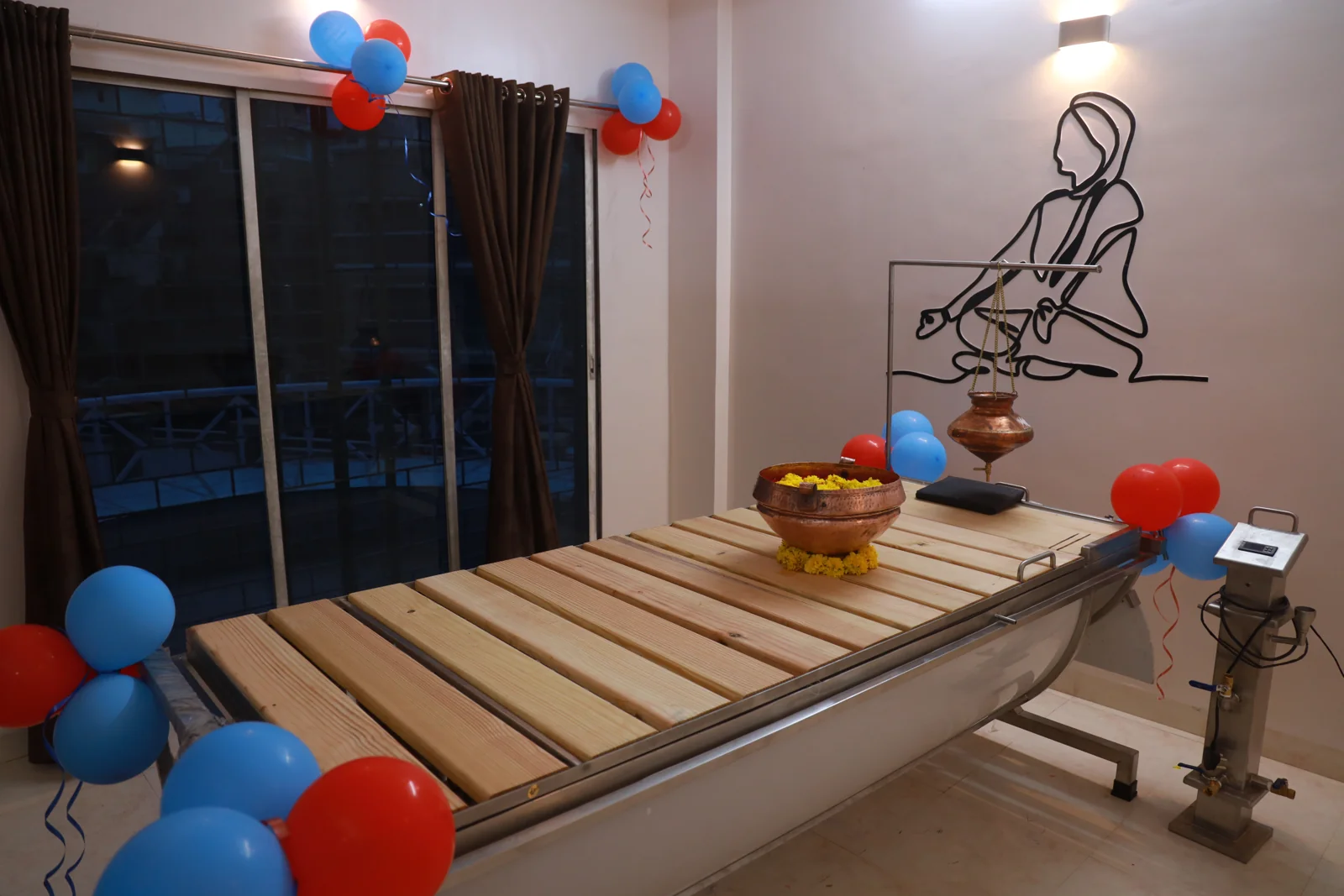
The area is positioned and exposed with appropriate draping, and the team prepares the retaining boundary and application under professional supervision. During the session, the focus should remain on safe contact, comfort and your response. This description is deliberately an overview, not instructions for preparing oils, selecting heat, making a retaining ring or attempting the procedure at home.
Tell the team immediately if there is burning, increasing pain, itching, dizziness, breathing discomfort or an unpleasant change in symptoms. You should be able to request a pause or stop without feeling that doing so means treatment has failed. A predetermined routine should not take priority over the condition of the person receiving care.
Traditional purpose and realistic expectations
Ayurvedic reasoning may describe local stiffness and discomfort through qualities such as dryness, coldness or Vata-related patterns. Those explanations belong to a traditional clinical framework. They can be discussed respectfully without turning them into claims that oil penetrates a damaged disc, removes a trapped nerve or repairs an anatomical problem. Ask the clinician to connect traditional terminology with a practical care goal you can understand.
Some people may value warmth, relaxation and a feeling of reduced tightness during or after an external procedure. A comfortable experience can be meaningful, particularly when pain has made movement feel threatening. However, temporary comfort is different from a lasting improvement in walking, sleep or daily function. Both should be described accurately when reviewing a response.
No single procedure guarantees relief for every back condition. A positive plan can still be realistic: understand the problem, improve confidence in suitable movement, address the activities that matter to you and review whether the chosen support is helping. It is reasonable to consider a complementary option while retaining appropriate established medical or rehabilitation care.
Read the evidence in context
Government practice guidance describes external Basti as a complementary procedure and acknowledges limitations in the available studies. That is important context. A professional practice document can help explain how a therapy is recognized and supervised, but its existence is not proof that every advertised benefit is established. Research quality, the condition studied and the treatment comparison all matter.
A report of improvement during a combined programme cannot identify how much of the change came from external oil retention, other therapies, exercise, medicines, natural recovery or the attention received. Small studies without a strong comparison group also cannot reliably predict the result for a new patient. Ask which research is directly relevant to your diagnosis rather than accepting a broad claim about all back pain.
Patient stories are useful for understanding an experience, but they are not a substitute for a clinical explanation. A before-and-after scan should not be presented as proof that a local application repaired a disc. The more specific the claim, the more specific the evidence should be. Ask what remains uncertain and how that uncertainty affects the decision to proceed.
Keep movement and rehabilitation in the discussion
For many people with low-back pain, suitable activity and a progressive rehabilitation plan are important parts of management. What is suitable depends on symptoms, diagnosis, health and confidence. A therapist or clinician can help choose an appropriate starting point. An external procedure should not be used as a reason to remain inactive indefinitely or to abandon a rehabilitation plan that has been recommended.
Tell the clinician which movements you avoid because of pain or fear. Sometimes the main difficulty is not the intensity of pain at rest but uncertainty about lifting, walking, bending or returning to work. A useful plan considers those difficulties explicitly. The goal is safe participation in life, not an instruction to hold the back rigidly or avoid every ordinary movement.
If another professional is already guiding exercise or postoperative recovery, bring that advice. Different parts of care should support one another rather than create conflicting instructions. Ask who will review progress and whether information should be shared with your existing treating team. Coordination is particularly important after a recent injury, operation or major change in symptoms.
Skin, heat and positioning precautions
The skin over the treatment area should be considered before application. Explain a rash, eczema, broken skin, a recent wound, a skin infection or a previous reaction to topical products. The oil and the retaining material can both matter. Natural ingredients can still cause irritation or allergy, and a product used safely by someone else is not automatically suitable for you.
Reduced sensation may make it harder to judge warmth accurately. Diabetes-related nerve changes, previous injuries and some neurological conditions are relevant. The absence of pain does not prove that heat is safe. A supervising team needs to decide whether the procedure can be performed appropriately and how the response will be monitored.
Positioning also matters. Tell the team if lying face down is difficult because of breathing problems, abdominal discomfort, pregnancy-related considerations, recent surgery or another limitation. You should not be forced into an uncomfortable position merely to fit a standard setup. Assistance getting onto and off the treatment surface should be arranged when needed.
Connect the plan with work, travel and home life
Back symptoms often interfere with a specific task: standing at a counter, sitting through a journey, lifting a child or putting on footwear. Describe the task and what happens when you attempt it. This gives the consultation more useful information than a pain score alone. It also helps create a goal that can be reviewed after treatment.
Work patterns vary. Someone who drives for long periods may need a different practical discussion from a person who stands for a whole shift or repeatedly lifts loads. Ask about manageable changes to task duration, position changes, breaks or temporary assistance. There is no universal perfect posture that every person must hold all day, and rigid rules can make ordinary activity unnecessarily frightening.
Plan travel around your actual symptoms. If pain, weakness or dizziness makes driving or a two-wheeler journey unsafe, arrange assistance. Ask whether the session itself is likely to affect your practical arrangements, but do not assume a standard restriction applies to everyone. Advice should reflect the care actually received and your ability to travel safely.
Review benefit without chasing promises
Before starting, select one or two meaningful outcomes. You might want to walk a familiar distance more comfortably, sleep with fewer interruptions or complete a usual household task with greater confidence. Agree what change would count as worthwhile and when it should be reviewed. A clear goal helps distinguish useful support from a course that continues without a defined purpose.
A simple record can include the main activity affected, any new symptoms and whether the day was unusually demanding. You do not need to monitor discomfort every few minutes. A single good or bad day does not establish the effect of treatment. Bring the pattern, including how long any improvement lasted and whether medicines or activities changed at the same time.
If the plan is not helping, say so. Reassessment may lead to a different explanation, another type of treatment or a decision to stop the procedure. Continuing indefinitely is not the only positive response to persistent symptoms. Useful care includes recognizing when the current approach is insufficient and when further medical input is needed.
Understand costs, consent and alternatives
Confirm whether a quotation covers one session, a course or a combination of services. Ask what is included, which appointments are for review and what happens if the procedure is stopped. These are ordinary healthcare questions. A visitor should be able to understand the proposed commitment before agreeing, without pressure to purchase a package because the therapy is described as traditional.
You can ask for an explanation in a language you understand, request time to consider the proposal or discuss it with an existing clinician. Consent involves knowing the purpose, reasonable expectations, material risks, alternatives and the option of not proceeding. A signature alone does not replace that conversation.
Alternatives depend on the diagnosis and may include a different rehabilitation approach, medicine review, observation or specialist assessment. This guide does not prescribe which option you need. It encourages an informed comparison: what problem are we addressing, what benefit is plausible and what would make us change the plan?
Back symptoms that should not wait
Seek urgent medical assessment for new bladder or bowel control problems, numbness around the saddle area or new significant weakness, especially when symptoms involve both legs. These can indicate a serious neurological problem. Do not wait for a routine oil-therapy appointment, a website reply or a scheduled follow-up.
Back pain following a serious accident, or pain accompanied by fever, marked illness or other concerning changes also needs prompt assessment. People with an important medical history, such as cancer or a recent serious infection, should tell the clinician about a new or changing back symptom. The appropriate urgency depends on the whole situation.
Emergency symptoms and routine supportive care have different purposes. Choosing Ayurvedic consultation should not mean delaying an investigation, operation or specialist treatment that is considered necessary. A responsible plan keeps those pathways available and explains clearly when another level of care is more appropriate.
A leg symptom deserves a clear explanation
Pain spreading into the leg can be frightening, but the pattern needs to be described rather than labelled from a diagram. Explain where it travels, whether it goes below the knee and whether it is accompanied by altered sensation or weakness. Leg symptoms can have more than one explanation. A clinician may examine nerve function and consider whether a referral or further investigation is needed before discussing a local procedure.
Be specific about changes. Feeling sore after an unusually active day is not the same as losing the ability to lift a foot or developing a new numb area. If you are unsure how to describe a symptom, demonstrate the affected task or point to the area. Useful communication does not require knowing medical terminology. It requires telling the team what is different from your usual pattern.
Make the plan understandable at home
At the end of the visit, try summarising the plan in your own words. You should understand the likely explanation for your symptoms, what has been proposed, what you should continue and what would trigger review. If an instruction conflicts with another clinician’s advice, ask for clarification before changing your routine. A written summary can be helpful when several recommendations have been discussed together.
If a family member helps with mobility or travel, include them with your permission in the practical discussion. They can assist with remembering arrangements without taking over your decisions. Ask which contact is appropriate for a routine question and where to seek urgent care. A clinic telephone number or WhatsApp channel is not a substitute for an emergency assessment.
Privacy and dignity during an external therapy
Only the necessary area should be exposed for an examination or procedure, with suitable draping and a clear explanation before contact. You can ask about the practitioner, supervision, assistance and a chaperone where appropriate. If you feel uncomfortable about the setup, discuss it before proceeding. Respectful communication remains important even when the procedure is familiar to the team.
Photographs or videos should never be assumed to be part of treatment consent. A person receiving care can ask that no recording take place. Permission to receive a procedure and permission to use an image in advertising are separate decisions. Images on this website are educational references and should not be read as evidence that a particular result occurred at the Pimpri clinic.